
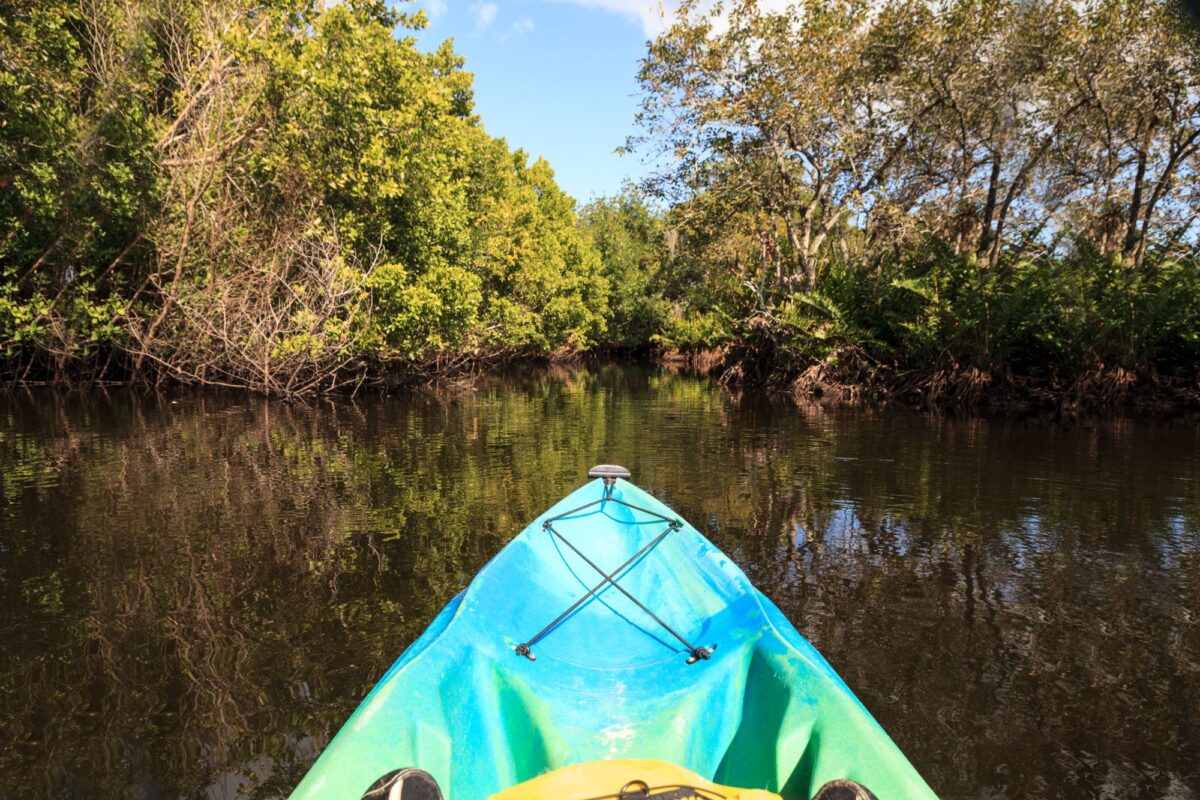
Winter opens up a different side of the Gulf Coast. In Texas, endangered whooping cranes gather in coastal wetlands. Along Alabama’s shoreline, cooler temperatures make biking and hiking more comfortable. And in Florida, manatees seek out warm springs while paddlers explore mangrove-lined waterways.
With so many places to explore between Texas and Southwest Florida, the hardest part might be deciding where to go.
Our interactive map highlights 15 destinations across five Gulf Coast states, from wildlife refuges and state parks to fishing hotspots and shell-covered beaches. Choose an activity to see where to go, then select a destination for details and tips to help plan your visit.
Use the interactive map below to find your next winter adventure.
From whooping cranes in Texas to manatees in Florida, explore the best places for winter adventures along the Gulf Coast.
The interactive map isn’t available here. Select a destination below to read more.
Browse all destinations (15)
-
Big Shell and Little Shell beaches, Padre Island National Seashore
Access note: Generally requires a four-wheel-drive vehicle. Not suited to an ordinary passenger car.
Why go in winter: Remote shelling beaches reached by driving down South Beach.
Tip: These beaches are remote, so check current beach driving conditions with the National Park Service before you go.
Map pin: where South Beach begins, near Malaquite. Little Shell and Big Shell lie farther south along the beach; one marker covers both.
Padre Island National Seashore (National Park Service) (opens in a new tab)
-
Goose Island State Park
Why go in winter: Another coastal spot where wintering whooping cranes may be seen.
Tip: Bring binoculars and scan the marshes and shallows patiently; crane sightings vary from day to day.
Map pin: state park on the Lamar Peninsula, north of Rockport (approximate).
Goose Island State Park (Texas Parks and Wildlife) (opens in a new tab)
-
Aransas National Wildlife Refuge
Why go in winter: Winter home of endangered whooping cranes, which are typically present from fall through early spring.
Tip: Boat tours from Rockport and Fulton offer viewing opportunities. Cranes are wild, so sightings aren’t guaranteed.
Map pin: refuge visitor area on the Blackjack Peninsula (approximate).
Aransas NWR (U.S. Fish and Wildlife Service) (opens in a new tab)
-
Terrebonne Parish coastal wetlands
Why go in winter: Coastal wetlands known for winter birding, including waterfowl and bald eagles.
Tip: Birding spots are spread across the parish’s marshes, so plan a route before heading south toward the coast.
Map pin: Houma, the parish seat. This is a regional marker, not a specific site.
-
Barataria Preserve
Access note: Many preserve trails are closed for reconstruction. Twin Canals Trail remains open. Verify current conditions before you go.
Why go in winter: Winter wetland walks a short drive from New Orleans.
Tip: Review the National Park Service conditions page on the day of your visit.
Map pin: preserve visitor area near Marrero (approximate).
Barataria Preserve (National Park Service) (opens in a new tab)Current conditions (NPS) (opens in a new tab)
-
Grand Isle
Why go in winter: A barrier island destination known for coastal fishing.
Tip: Winter fronts can change conditions quickly on a barrier island, so check the forecast before heading out.
Map pin: Grand Isle.
-
Venice
Why go in winter: A major destination for winter redfish and speckled trout fishing.
Tip: Venice sits near the mouth of the Mississippi River. Check Louisiana licensing and current limits before you go.
Map pin: Venice, Plaquemines Parish.
-
Biloxi Bay Bridge
Why go in winter: Bridge pilings and nearby structure attract sheepshead during the cooler months.
Tip: Check Mississippi licensing and current rules before you fish.
Map pin: Biloxi Bay Bridge between Biloxi and Ocean Springs (approximate midpoint).
Biloxi harbors, marinas and piers (City of Biloxi) (opens in a new tab)
-
Pine Beach Trail, Bon Secour National Wildlife Refuge
Why go in winter: A hike through coastal forest, dunes and wetlands that ends at a quiet Gulf beach.
Tip: Cooler days make the exposed dune sections more comfortable; bring water anyway.
Map pin: trailhead area on the Fort Morgan Peninsula (approximate).
Bon Secour NWR trails (U.S. Fish and Wildlife Service) (opens in a new tab)
-
Graham Creek Nature Preserve
Why go in winter: Off-road biking through forests, wetlands and coastal habitats.
Tip: Check the preserve’s website for current trail information before you ride.
Map pin: preserve in Foley (approximate).
-
Hugh S. Branyon Backcountry Trail
Why go in winter: More than 28 miles of trails through coastal ecosystems, well suited to riding in cooler weather.
Tip: The trail network spans Gulf Shores and Orange Beach, so check the trail map to pick a starting point.
Map pin: Gulf State Park area. The trail has multiple access points (approximate).
Backcountry Trail (City of Orange Beach) (opens in a new tab)
-
Western Lake, Grayton Beach State Park
Why go in winter: A rare coastal dune lake with calm paddling.
Tip: Check the state park’s website for current access and launch information.
Map pin: Western Lake, Grayton Beach State Park (approximate).
Grayton Beach State Park (Florida State Parks) (opens in a new tab)
-
Three Sisters Springs, Crystal River
Why go in winter: A warm-water refuge where manatees gather in colder weather, particularly from mid-November through March.
Tip: Watch from the boardwalk. Give manatees space; never touch, chase or disturb them.
Map pin: Three Sisters Springs, Crystal River.
Three Sisters Springs (City of Crystal River) (opens in a new tab)
-
Sanibel Island
Why go in winter: Famous for its diverse shells, particularly after winter cold fronts and storms.
Tip: Review Sanibel’s shelling regulations before you collect anything.
Map pin: Sanibel Island. This is an island-wide marker.
-
Ten Thousand Islands
Why go in winter: Mangrove islands and waterways offering excellent dry-season paddling and wildlife watching.
Tip: The mangrove maze is tidal and easy to get turned around in, so carry navigation aids and plan around the tides.
Map pin: Everglades City, a common gateway. The islands extend along the coast to the northwest.
Ten Thousand Islands NWR (U.S. Fish and Wildlife Service) (opens in a new tab)
Winter weather varies considerably from Texas to southwest Florida. Conditions, wildlife activity and access can change. Check official sources before visiting.
Looking for more ideas? Read our companion guide to the best outdoor activities on the Gulf Coast this winter for a closer look at what’s in season and where to experience it.
Your home base for the great outdoors. Sign up for the Camp & Country newsletter
Keep the adventure going. Follow Camp & Country on Instagram, Facebook, X and Bluesky for outdoor inspiration, trip ideas and more.