
While much of the country scrapes windshields and shovels driveways in winter, the Gulf Coast is in its prime. The humidity has dropped, mosquitoes have thinned out and the worst of the summer heat is gone.
What’s left is the coast at its most comfortable, with plenty to do outside. From Texas to Southwest Florida, here’s what’s actually worth doing and where to go.
Birding
Spring and fall migration may bring the most species, but winter is when one of North America’s rarest birds arrives: the whooping crane. More than 500 of them winter in and around Aransas National Wildlife Refuge along the Texas coast after flying in from Wood Buffalo National Park in Canada. They’re part of the last remaining naturally occurring wild flock of whooping cranes, typically staying from fall through early spring. For the best views, book a boat tour out of Rockport or nearby Fulton, which gets you closer than the refuge’s observation tower. Prefer to stay on land? Goose Island State Park is another spot to visit, where they’re often seen wandering the coastal wetlands.
Farther east, Louisiana’s marshes fill with ducks, geese and wading birds, while bald eagles nest in the state’s coastal swamps during the cooler months. Terrebonne Parish has historically had one of Louisiana’s highest concentrations of bald eagle nests, making the surrounding wetlands worth exploring on a guided swamp tour.
Manatee watching
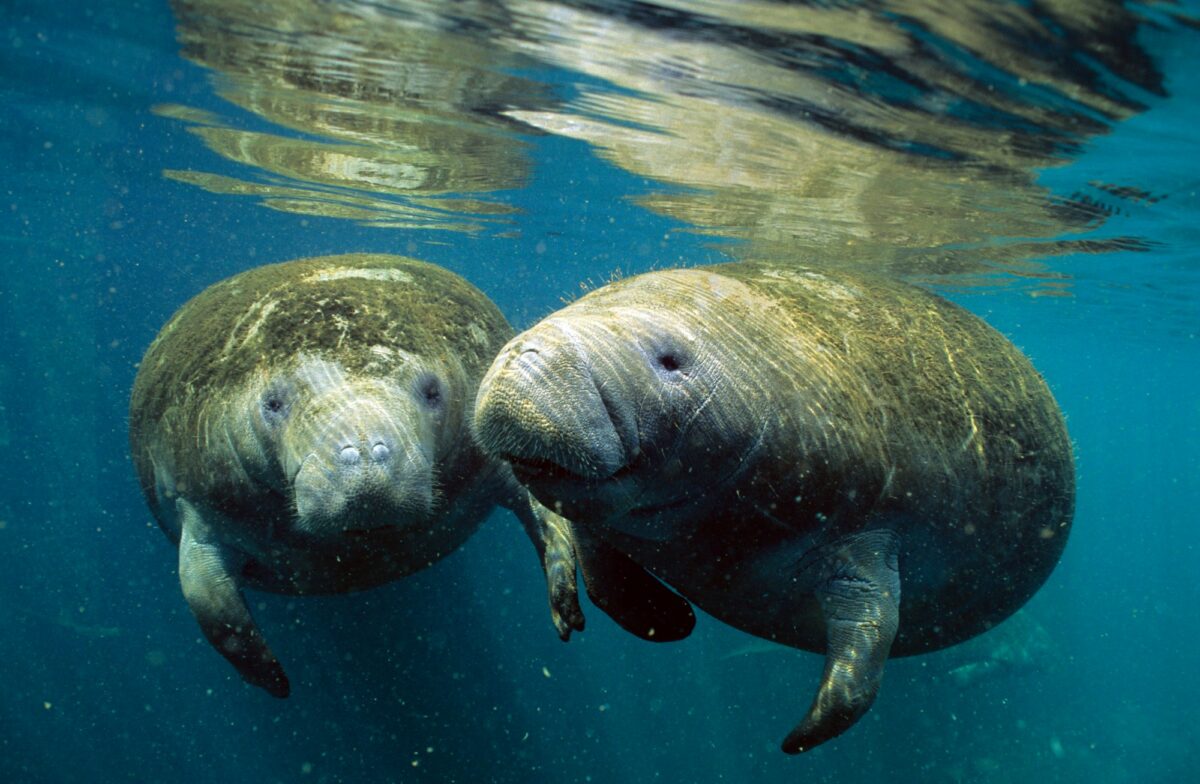
On the Florida Gulf Coast, manatees are the winter headliner. When water temperatures drop below about 68 degrees, they head for warm-water sites such as springs and power plant outflows. Crystal River, about 90 minutes north of Tampa, is widely considered the best place to see them, with warm springs and a national wildlife refuge created specifically to protect them. Head to Three Sisters Springs, where hundreds of manatees can gather during cold spells from mid-November through March. You can watch them from the boardwalk, but plan ahead: There’s no public parking at the boardwalk, though shuttle, walk-in and bicycle access are available. Aim for a weekday morning to avoid the biggest crowds.
Fishing
Winter fishing on Mississippi’s Gulf Coast belongs to the sheepshead (look for the black stripes and oddly human-looking teeth). From fall through February, they gather around bridge and dock pilings, jetties and reefs to feed on barnacles. Start around the Biloxi Bay Bridge, where the pilings attract sheepshead. Bring sturdy gear, though: Barnacles can cut your line.
Cold also sends redfish and speckled trout into deeper holes and channels, where the water stays steadier. In Louisiana, that concentrates them in predictable spots for some of the year’s best fishing. Two favorites south of New Orleans are Venice, the last town you can drive to down the Mississippi River and often called the “Redfish Capital of the World,” and Grand Isle, a barrier island town known for its beaches and fishing. Most anglers need a saltwater fishing license, and size and bag limits vary by state, so check the rules ahead of time.
Biking
Summer in Gulf Shores is for the beach, and winter is for the bike. January highs sit in the upper 50s, a far cry from the near-90-degree days of midsummer, so you can ride all day without wilting. The Hugh S. Branyon Backcountry Trail, ranked No. 2 in USA Today’s 2026 readers’ choice voting for best recreational trail, is a 28-plus-mile trail system through Alabama’s Gulf State Park. Pass through nine ecosystems, including coastal dunes, maritime forests and freshwater swamps, and keep an eye out for alligators, bobcats and river otters along the way.
Graham Creek Nature Preserve in Foley, Alabama, has trails for off-road riders. Its rustic, unpaved trails include a 7.5-mile mountain bike route through bottomland forests, wetlands, longleaf pine savannas and tidal marshes. Pick up a trail map at the Interpretive Center or a kiosk first, because the preserve has a mix of marked and unmarked trails.
Hiking
The same trails that leave you drenched and swatting mosquitoes in July become far more pleasant in winter. Just outside New Orleans, Barataria Preserve puts you right in the middle of Louisiana’s swamp country, but most of its trails are currently closed for repairs. The Twin Canals Trail remains open, and the nearby Wetland Trace Boardwalk in Jean Lafitte offers another way to explore the wetlands. Check current conditions before visiting, since the National Park Service expects repairs to continue into 2028.
On Alabama’s Gulf Coast, the Pine Beach Trail at Bon Secour National Wildlife Refuge takes hikers through maritime forest, sand dunes and coastal wetlands on the way toward the Gulf. The payoff is a quiet stretch of beach that’s good for shell hunting, with chances to spot coastal birds and wildlife along the way.
Paddling
Ask paddlers when to hit the water along Florida’s Gulf Coast, and many will say winter, when the quiet stretches of water offer the kind of solitude Henry David Thoreau praised in “Walden.” Few places show it off better than the Ten Thousand Islands off Everglades City, a maze of mangrove islands near Everglades National Park. During the dry season, which runs roughly from November through April, paddlers might spot wading birds, dolphins and manatees. It’s also the busiest time of year, so book lodging and any guided trips early.
In the Panhandle, paddlers can try something most coasts don’t offer. Western Lake in Grayton Beach State Park is a rare coastal dune lake, found in only a handful of places worldwide, including Australia, Madagascar, New Zealand and Oregon. Western Lake offers calm water for paddlers of different experience levels, with coastal dunes and natural areas surrounding the lake. Kayak rentals are available through the park. Check the park’s operating status before visiting, since storm-related closures can affect access.
Beachcombing and shelling
Sure, walking the beach in cooler months makes for great photos, but experienced beachcombers know shelling is the real draw. Cold fronts and storms stir up the Gulf floor and push shells ashore, and the season’s lowest tides reveal even more. That’s why collectors flock to Sanibel Island, known as the “Seashell Capital of the World,” where more than 400 varieties wash up on its beaches. Winter’s peak shelling season is also the island’s busiest, so head out early.
For a quieter alternative, Padre Island National Seashore near Corpus Christi, Texas, has its own hot spots. Little Shell and Big Shell beaches collect more shells than most because two offshore currents push them onto the sand. Common arks, cockles, coquina and quahogs wash up at both, with smaller shells at Little Shell and larger ones at Big Shell. Reaching them takes a four-wheel-drive vehicle and a drive of roughly 20 miles down South Beach.
From whooping cranes in Texas to manatees in Florida, explore the best places for winter adventures along the Gulf Coast.
The interactive map isn’t available here. Select a destination below to read more.
Browse all destinations (15)
-
Big Shell and Little Shell beaches, Padre Island National Seashore
Access note: Generally requires a four-wheel-drive vehicle. Not suited to an ordinary passenger car.
Why go in winter: Remote shelling beaches reached by driving down South Beach.
Tip: These beaches are remote, so check current beach driving conditions with the National Park Service before you go.
Map pin: where South Beach begins, near Malaquite. Little Shell and Big Shell lie farther south along the beach; one marker covers both.
Padre Island National Seashore (National Park Service) (opens in a new tab)
-
Goose Island State Park
Why go in winter: Another coastal spot where wintering whooping cranes may be seen.
Tip: Bring binoculars and scan the marshes and shallows patiently; crane sightings vary from day to day.
Map pin: state park on the Lamar Peninsula, north of Rockport (approximate).
Goose Island State Park (Texas Parks and Wildlife) (opens in a new tab)
-
Aransas National Wildlife Refuge
Why go in winter: Winter home of endangered whooping cranes, which are typically present from fall through early spring.
Tip: Boat tours from Rockport and Fulton offer viewing opportunities. Cranes are wild, so sightings aren’t guaranteed.
Map pin: refuge visitor area on the Blackjack Peninsula (approximate).
Aransas NWR (U.S. Fish and Wildlife Service) (opens in a new tab)
-
Terrebonne Parish coastal wetlands
Why go in winter: Coastal wetlands known for winter birding, including waterfowl and bald eagles.
Tip: Birding spots are spread across the parish’s marshes, so plan a route before heading south toward the coast.
Map pin: Houma, the parish seat. This is a regional marker, not a specific site.
-
Barataria Preserve
Access note: Many preserve trails are closed for reconstruction. Twin Canals Trail remains open. Verify current conditions before you go.
Why go in winter: Winter wetland walks a short drive from New Orleans.
Tip: Review the National Park Service conditions page on the day of your visit.
Map pin: preserve visitor area near Marrero (approximate).
Barataria Preserve (National Park Service) (opens in a new tab)Current conditions (NPS) (opens in a new tab)
-
Grand Isle
Why go in winter: A barrier island destination known for coastal fishing.
Tip: Winter fronts can change conditions quickly on a barrier island, so check the forecast before heading out.
Map pin: Grand Isle.
-
Venice
Why go in winter: A major destination for winter redfish and speckled trout fishing.
Tip: Venice sits near the mouth of the Mississippi River. Check Louisiana licensing and current limits before you go.
Map pin: Venice, Plaquemines Parish.
-
Biloxi Bay Bridge
Why go in winter: Bridge pilings and nearby structure attract sheepshead during the cooler months.
Tip: Check Mississippi licensing and current rules before you fish.
Map pin: Biloxi Bay Bridge between Biloxi and Ocean Springs (approximate midpoint).
Biloxi harbors, marinas and piers (City of Biloxi) (opens in a new tab)
-
Pine Beach Trail, Bon Secour National Wildlife Refuge
Why go in winter: A hike through coastal forest, dunes and wetlands that ends at a quiet Gulf beach.
Tip: Cooler days make the exposed dune sections more comfortable; bring water anyway.
Map pin: trailhead area on the Fort Morgan Peninsula (approximate).
Bon Secour NWR trails (U.S. Fish and Wildlife Service) (opens in a new tab)
-
Graham Creek Nature Preserve
Why go in winter: Off-road biking through forests, wetlands and coastal habitats.
Tip: Check the preserve’s website for current trail information before you ride.
Map pin: preserve in Foley (approximate).
-
Hugh S. Branyon Backcountry Trail
Why go in winter: More than 28 miles of trails through coastal ecosystems, well suited to riding in cooler weather.
Tip: The trail network spans Gulf Shores and Orange Beach, so check the trail map to pick a starting point.
Map pin: Gulf State Park area. The trail has multiple access points (approximate).
Backcountry Trail (City of Orange Beach) (opens in a new tab)
-
Western Lake, Grayton Beach State Park
Why go in winter: A rare coastal dune lake with calm paddling.
Tip: Check the state park’s website for current access and launch information.
Map pin: Western Lake, Grayton Beach State Park (approximate).
Grayton Beach State Park (Florida State Parks) (opens in a new tab)
-
Three Sisters Springs, Crystal River
Why go in winter: A warm-water refuge where manatees gather in colder weather, particularly from mid-November through March.
Tip: Watch from the boardwalk. Give manatees space; never touch, chase or disturb them.
Map pin: Three Sisters Springs, Crystal River.
Three Sisters Springs (City of Crystal River) (opens in a new tab)
-
Sanibel Island
Why go in winter: Famous for its diverse shells, particularly after winter cold fronts and storms.
Tip: Review Sanibel’s shelling regulations before you collect anything.
Map pin: Sanibel Island. This is an island-wide marker.
-
Ten Thousand Islands
Why go in winter: Mangrove islands and waterways offering excellent dry-season paddling and wildlife watching.
Tip: The mangrove maze is tidal and easy to get turned around in, so carry navigation aids and plan around the tides.
Map pin: Everglades City, a common gateway. The islands extend along the coast to the northwest.
Ten Thousand Islands NWR (U.S. Fish and Wildlife Service) (opens in a new tab)
Winter weather varies considerably from Texas to southwest Florida. Conditions, wildlife activity and access can change. Check official sources before visiting.
Your home base for the great outdoors. Sign up for the Camp & Country newsletter
Keep the adventure going. Follow Camp & Country on Instagram, Facebook, X and Bluesky for outdoor inspiration, trip ideas and more.