

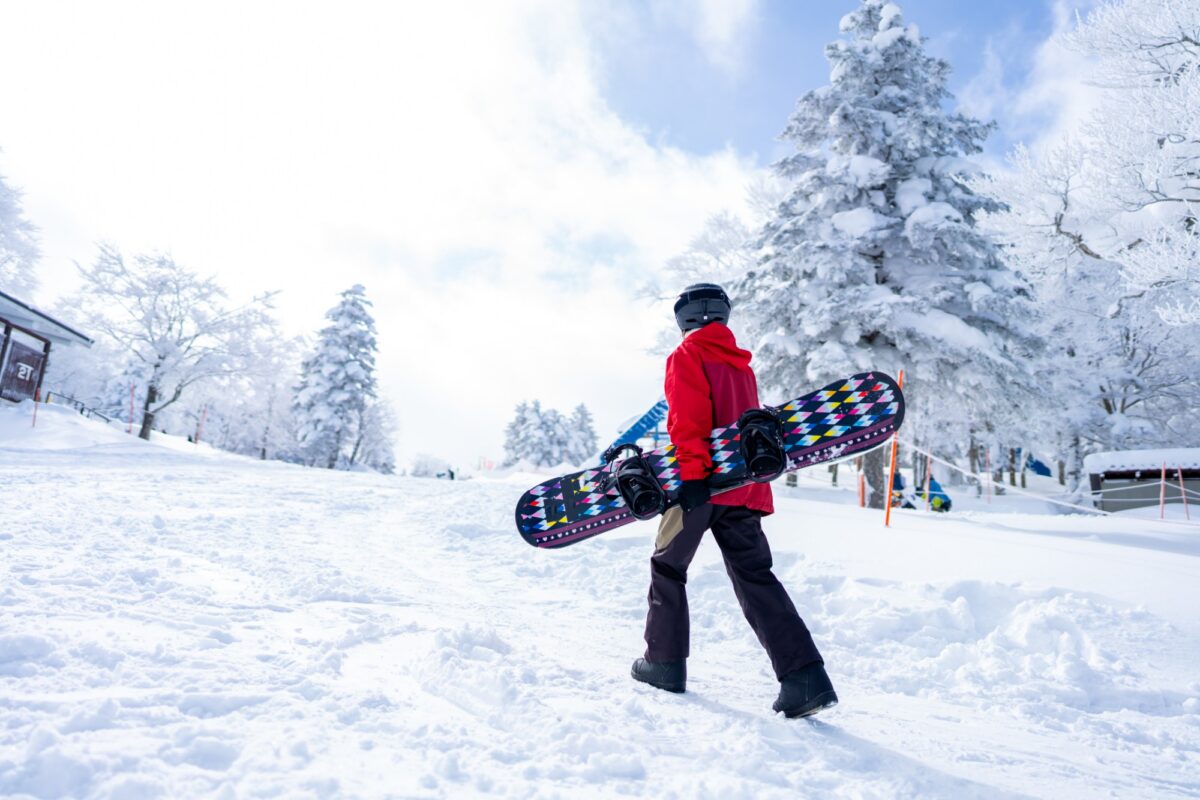
Like many winter sports, snowboarding is a gear-intensive hobby. Besides the snowboard itself, you’ll need snowboard boots, bindings, a helmet and goggles. Since it’s a snow sport, you’ll also need to consider soft goods: clothes designed to keep you warm and dry.
A snowboard jacket and snowboard pants will keep you dry, while waterproof gloves will keep your hands warm. A midlayer like a fleece zip-up will help keep you warm, and if it’s cold enough, you’ll also want a set of base layer tops and bottoms to add insulation. And you’ll want a good pair of warm, moisture-wicking snowboard socks to keep your feet comfortable inside your boots.
All things considered, this gear could run well over $1,000 if you purchase it all at once. That’s a pretty steep price to pay if you’re just starting out. Fortunately, you can rent some of the priciest items at many ski resorts. Here’s what you can rent and what you’ll need to borrow or buy for your first day of snowboarding.
What to buy or borrow
Base layer top and bottoms
Editor's Picks
Base layers are the foundation for keeping you warm. These layers sit next to your skin, providing insulation while wicking away sweat. Since this is basically underwear, I’d recommend buying your own. You can pick up a good synthetic set like the REI Co-op Lightweight Long-Sleeve Crew Base Layer Top and Lightweight Base Layer Bottoms for about $90 at regular price.
Snowboard socks
Similar to the base layers above, snowboard socks are designed to keep your feet warm and dry. Some also have extra padding around the shin and other pressure points for added comfort inside your boots. You don’t need the thickest pair you can find, though. A single pair of moisture-wicking, midweight socks is generally enough. I’m a fan of the Darn Tough Heady Yeti socks ($33). The merino wool is odor-resistant, and Darn Tough backs its socks with a lifetime guarantee.
Midlayer fleece or puffy jacket
You’ll want a warmer midlayer, like a down jacket or fleece pullover, for added insulation to keep your torso warm. These can be pricey, but you can borrow one from a friend since this isn’t a next-to-skin layer. Fleece is a good choice because it breathes well and dries quickly if you sweat. Down provides excellent warmth but doesn’t perform as well when wet. A synthetic crew-neck or hooded sweatshirt will do in a pinch.
Goggles and gloves
Many resorts don’t rent goggles, so it’s worth bringing a pair just in case. I’ve seen people wear sunglasses on the slopes, but goggles are a better choice in snowy or windy conditions. They keep wind and powder from whipping past your eyes, reduce glare reflecting off the snow and are less likely to fall off if you take a tumble. Try to borrow a pair from a friend if you can.
The same goes for gloves. Since you’ll be putting your hands in the snow often when you sit, adjust your bindings and take the (hopefully) occasional fall, you’ll want a waterproof pair that keeps your hands warm and dry. If you already have snow gloves, they’ll do in a pinch.
Snowboard pants and jacket
This is where it gets expensive. I’ve never seen a place that rents out snowboard pants and jackets, and buying them can cost several hundred dollars. This can be a hard pill to swallow if you’re not sure you actually like snowboarding. If you don’t want to spend the money on actual snowboard gear, you can start with a waterproof rain jacket and waterproof hiking pants. Just make sure they allow the range of motion that you’ll need for carving (and falling), and wear enough insulation underneath to stay warm.
What you can rent
Snowboard, boots and bindings
Most ski resorts offer snowboards, bindings and boots for rent, which is great because these are generally the most expensive parts of the snowboarding setup. Plus, you’ll have someone to help you find a setup suited to learning how to ride. The rental attendant can help you choose a board based on your height, weight and ability level, find boots that fit and adjust the bindings for your stance.
Helmet
Don’t forget a helmet. Many resorts rent them, either as part of an equipment package or separately, so you don’t necessarily need to buy one before your first day. Just make sure you have a properly fitting helmet designed for skiing or snowboarding before you hit the slopes. Check with the resort ahead of time to see whether it’s included in your rental.
One last thing: Check whether your resort offers a beginner package that combines rentals, a lesson and lift access. Booking those together can save you money, and a lesson is a good way to get started.
Camp & Country · Interactive
Your first-day snowboard kit
Suit up for the slopes without buying everything in sight.
Usually available to rent at the resort
- Snowboard, boots and bindings — most resorts rent them, often as a package, and staff can fit you.
- Helmet — many resorts rent them, but not all. A properly fitting snow-sports helmet is not optional, so check ahead.
Bring, borrow or buy
- Moisture-wicking base layer top and bottoms
- One pair of midweight, moisture-wicking snowboard socks
- An insulating midlayer, such as fleece
- Waterproof jacket and pants (waterproof rain gear can work if it lets you move freely)
- Waterproof gloves and goggles — many resorts don’t rent goggles
Turn on JavaScript to build your personalized kit and packing list.
Your home base for the great outdoors. Sign up for the Camp & Country newsletter
Keep the adventure going. Follow Camp & Country on Instagram, Facebook, X and Bluesky for outdoor inspiration, trip ideas and more.