
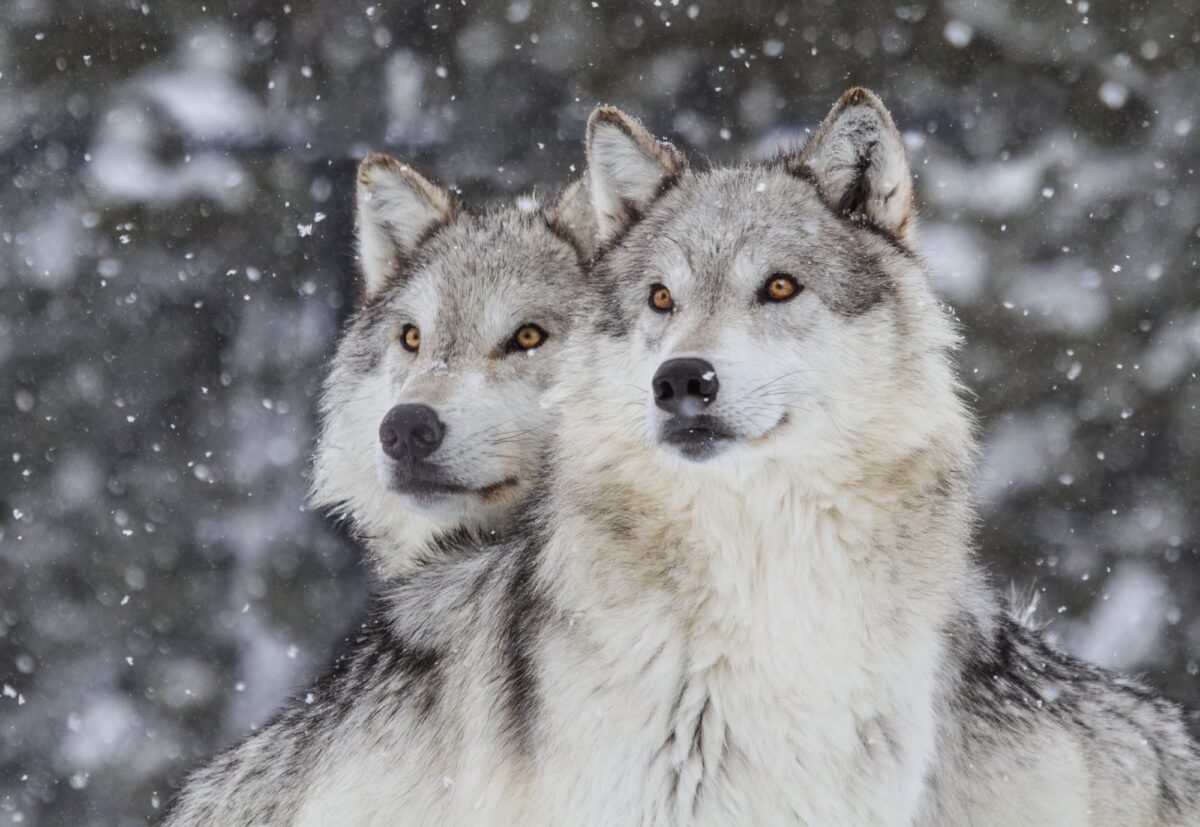
At an oxbow in the river, a dark-coated wolf from Mollie’s pack, one of Yellowstone’s original reintroduced wolf packs, stepped into the water and began to swim. Morning mist curled, obscuring the view; when it cleared, we saw that a second wolf had joined the first, and twin V-shaped wakes marked their progress to the far bank. There, partly hidden by brush, lay an elk carcass. The wolves would eat their fill, then return to the den to regurgitate food for their pups, which were too young to hunt.
Each of us, students in one of Yellowstone Forever’s field seminars, observed through binoculars, spotting scopes and telephoto lenses as the wolves emerged from the river in a nose-to-tail shaking shiver that sent spray flying. With a glance over their shoulders, they entered the woods and disappeared from sight.
Learning about wolves in the wild
We’d come to the historic Lamar Buffalo Ranch in Yellowstone National Park’s Lamar Valley for just this experience — the chance to witness wolves in the wild and learn about these misunderstood creatures from biologist Joanna Lambert.
The previous afternoon, we’d received a surprise visit from Rick McIntyre, a retired park ranger who worked on Yellowstone’s wolf reintroduction project in the mid-1990s. He happened to be in the area and asked to join us.
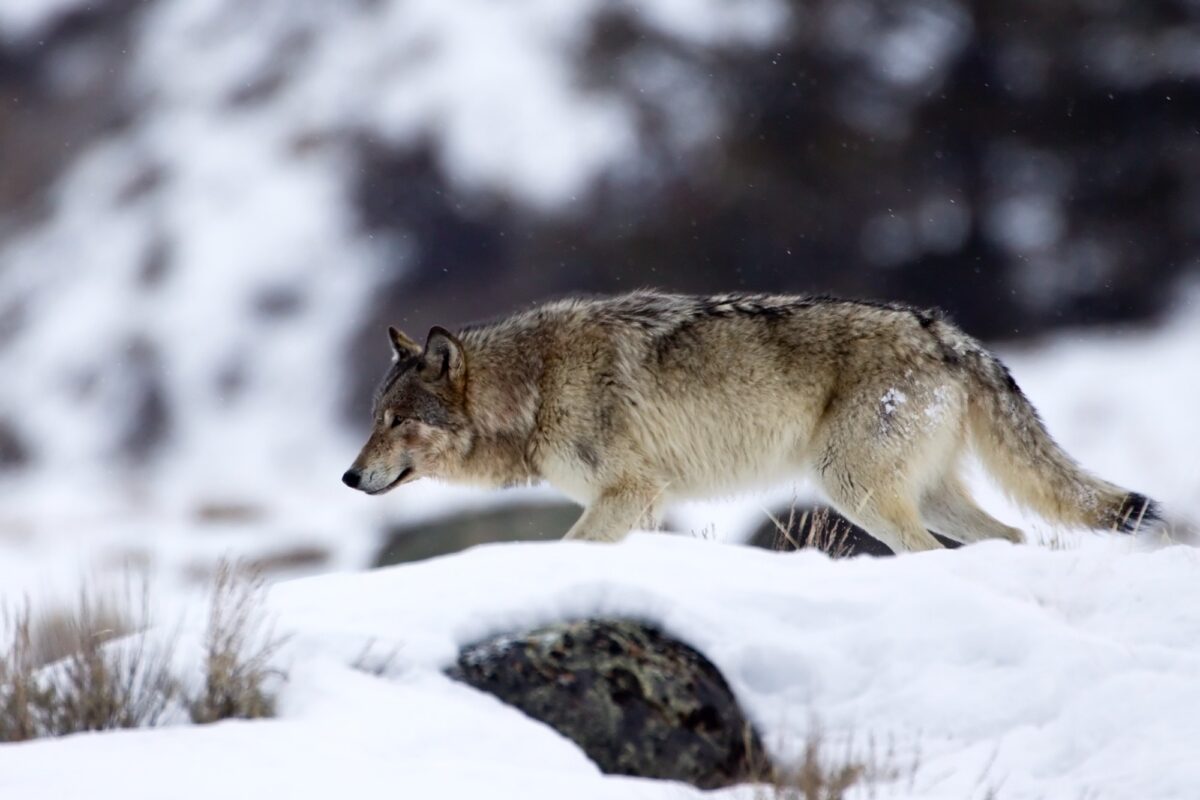
Our days were split between talks on the biology, evolution and ecological impact of wolves and hours in the field observing them from afar.
That first morning, we also watched through scopes as the pups fed, played and practiced their howls. That encounter was just the beginning.
Hiking to one of the pens where wolves were temporarily held before being released into Yellowstone during the park’s 1990s reintroduction effort, watching mountain goats doing high-wire acts on impossibly steep cliffs and seeing grizzlies and black bears — solo and with cubs — in the woods were other highlights. Watching thousands of bison graze the Lamar Valley cemented its nickname, the “American Serengeti,” a reference to the valley’s extraordinary abundance of wildlife, in my mind.
Planning a Yellowstone Forever experience
Yellowstone Forever, the official nonprofit partner of Yellowstone National Park, offers field seminars, naturalist-led day hikes and daylong adventures. Some seminars are based at the historic Lamar Buffalo Ranch, a field campus generally closed to the public outside authorized programs. Some programs explore Yellowstone’s flora, fauna and geology; others focus on painting and wildlife photography. They help visitors develop deeper relationships with the park.
Prices, trip lengths and lodging arrangements vary by program, so check the current seminar listings before booking. Yellowstone Forever also offers separate Lodging & Learning packages, developed with Yellowstone National Park Lodges.
Summer field seminars run from May through September, with winter seminars offered from November through March. Topics and instructors vary by session.
Finding similar experiences at other parks
Yellowstone Forever opened my eyes to the wonders of Yellowstone and to what nonprofit partners can offer elsewhere. Yosemite Conservancy, for example, offers naturalist walks, outdoor adventures and art programs at Yosemite National Park.
Organizations such as Friends of Acadia and Smokies Life support their respective parks in different ways. Before visiting Yellowstone or another national park, look to the park’s official website and its nonprofit partners for opportunities to learn from people who know the place well.
Your home base for the great outdoors. Sign up for the Camp & Country newsletter