
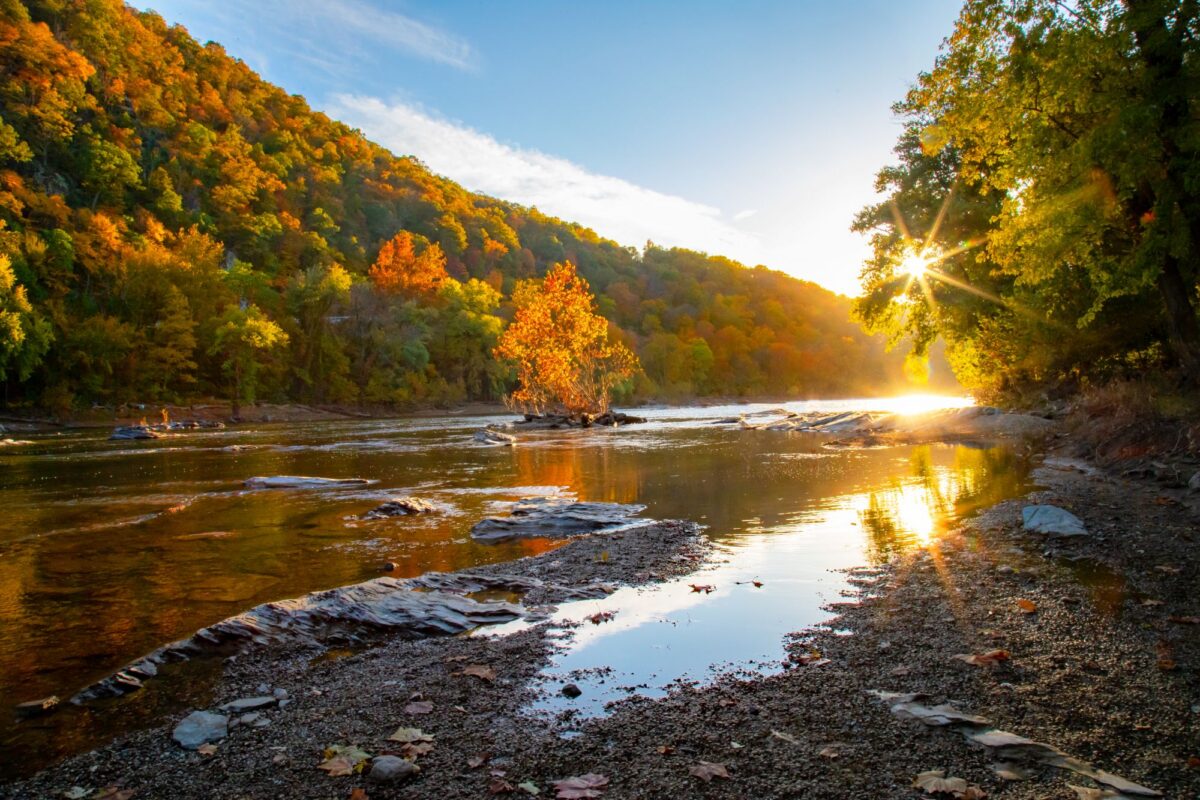
As Noah Kahan sings, “it’s the season of the sticks,” and November brings a version of that to much of the Southeast. On many mountain trails, the leaves are down, the air has a crisp bite and the summer crowds have thinned. Farther south, it’s the start of a more comfortable season outdoors.
I hiked Mount Mitchell, the tallest mountain east of the Mississippi, on a weekday in November and didn’t see another soul on the trail.
The catch? Inches of fallen leaves buried the path, hiding the rocks and roots and making every step a little treacherous. That’s the trade-off on many mountain trails: quieter paths and open views in exchange for variable conditions. So what’s actually worth doing in November?
Hike a canyon while the trees are bare
Cloudland Canyon State Park in Georgia and Little River Canyon National Preserve in Alabama can be even better in November than in summer. As leaves fall, views of canyon walls and waterfalls open through the trees, and the cool air makes steep climbs more bearable. Waterfall flow varies, and Little River can run low in dry stretches, so don’t count on a roaring cascade.
Watch your footing: Fallen leaves hide rocks and roots, and wet stairs get slick. Daylight also runs out fast once the clocks change, so start early.
Hike the lower Smokies, Tennessee
By November, the high country in Great Smoky Mountains National Park can feel like winter, but lower elevations offer good hiking options. Explore trails off Little River Road, where creeks and bare-tree views replace summer’s green wall.
Mountain weather changes fast, though. Newfound Gap Road can close for snow and ice, and Kuwohi Road, formerly Clingmans Dome Road, is scheduled to remain open through Nov. 29, 2026, weather permitting. Check the park’s road alerts before setting out, and have a lower-elevation backup in mind.
Follow Skyline Drive through Virginia
Shenandoah National Park is a different place as the fall crowds thin. Bare trees open up the views from the overlooks, and Skyline Drive’s speed limit of 35 mph in most places is a good excuse to slow down. Pair the drive with a short hike to a summit or waterfall.
Services wind down quickly. Many waysides, lodges and camp stores close during November, and the drive can close on short notice because of hazardous weather. Fill up on gas before entering and check the park’s road status and operating schedule before you go.
Look for natural arches at Red River Gorge, Kentucky
Red River Gorge is known for its sandstone arches, and some of them are screened by trees in summer. As leaves fall in November, a few become easier to spot. The cool air also makes steep trails more pleasant.
The catch is footing: Wet leaves hide rocks and roots, and sandstone steps get slick after rain. Hunting seasons also overlap with fall hiking, so check the rules and dates for the land you’ll visit and wear blaze orange where hunting is allowed.
Paddle the floodplain at Congaree National Park, South Carolina
Congaree National Park is infamous for its aggressive mosquitoes, but cooler fall weather generally brings fewer insects and less humidity. Paddle Cedar Creek through old-growth bottomland forest, or walk the elevated boardwalk if you’d rather stay out of a boat. Fall color generally peaks from late October into early November.
Check the park’s current conditions and creek levels before setting out. Flooding can affect both paddling routes and boardwalk access, even when it hasn’t rained locally.
Watch the geese and swans at Pea Island, North Carolina
By November, the Outer Banks’ summer crowds have thinned, but the birds are arriving in force. Pea Island National Wildlife Refuge is a good place to see snow geese, tundra swans and other waterfowl on its ponds. The flat North Pond Wildlife Trail starts near the visitor center and leads half a mile to an observation tower.
Bring binoculars, give the birds plenty of space and take your time, because the best sightings often come when you stop moving. Pack layers, too: November weather on the coast can be windy and chilly.
Watch the manatees at Blue Spring State Park, Florida
As the St. Johns River cools, manatees gather in the constant 72-degree water at Blue Spring State Park. The winter viewing season generally runs from mid-November through March, with numbers depending on temperatures. Admire these massive creatures from the park’s boardwalk without disturbing them.
Day-use reservations are required. During manatee season, the spring run closes to swimming and other water activities.
Walk the Everglades as the dry season begins
South Florida’s dry season generally begins in November, bringing more comfortable temperatures, fewer mosquitoes and gradually receding water levels. As water levels drop, wildlife gathers around remaining ponds and alligator holes, making animals easier to spot.
The Anhinga Trail in Everglades National Park is a 0.8-mile round-trip walk on paved paths and boardwalks, with opportunities to see alligators, herons and turtles. For a longer outing, bike the paved 15-mile Shark Valley loop. Watch wildlife from a distance and give animals room to move.
Where to get outside in the Southeast this November
Pick an activity, then select a marker or a destination card.
Map tiles could not load. Every destination is still listed below.