
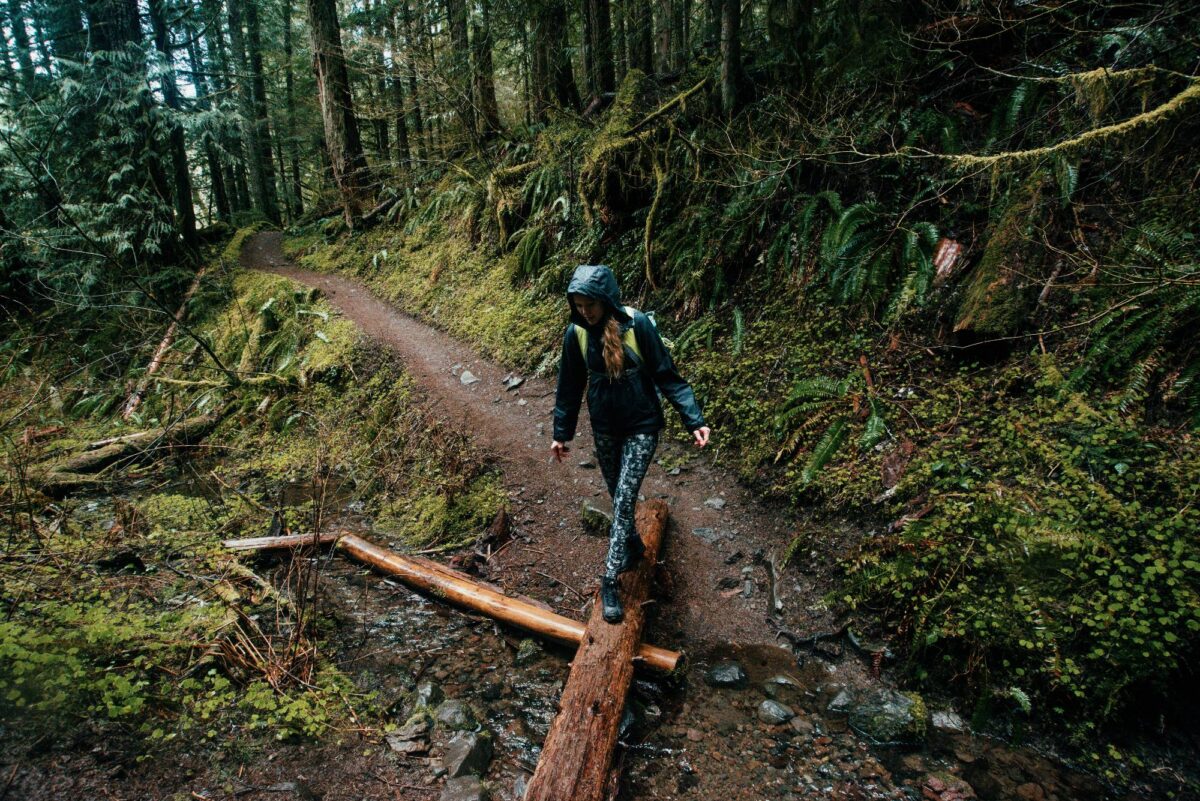
An old Scandinavian saying goes, “There is no such thing as bad weather, only bad clothing.”
That certainly holds true in the Pacific Northwest. With the right clothing, you can continue hiking throughout fall and into winter. But with the wrong clothing, you’ll be a shivering mess heading back to your car well before you reach your destination.
I’ve camped and hiked in this region for decades. My approach is to layer my clothing based on the conditions and my level of exertion. Here’s what I wear to stay warm and dry.
Choose the right base layer
Wear a lightweight long-sleeve shirt and long underwear next to your skin. Choose wool or a synthetic material that wicks moisture away from your skin, helping you stay dry and regulate your body temperature. You’ll likely wear your base layer from the start of your hike until the end.
Stay comfortable in a fleece
Light rain and mist are common on fall hikes in the Pacific Northwest. A fleece provides breathable warmth while you’re moving and can handle some dampness without leaving you clammy. If the rain picks up or the wind becomes an issue, add your waterproof shell.
Pack a puffer for colder conditions
If your hike gains significant elevation, expect temperatures to drop and winds to pick up. It can get much colder than the temperature at the trailhead would lead you to believe. When this happens, you want to have a down or synthetic puffer jacket, preferably with a hood, that you can pull out and zip up. If you run hot, a puffer jacket may be enough, but if you run cold, consider packing a pair of insulated pants as well.
Keep rain and wind out
Getting soaking wet in cold weather can turn a hike from uncomfortable to dangerous. If the rain transitions from mist to a downpour, keep your waterproof shell easily accessible so you can put it on quickly. While GORE-TEX is a popular option among hikers in the Pacific Northwest, more affordable waterproof rainwear, including options from Frogg Toggs, can also keep you dry.
Don’t forget your cold-weather accessories
Make sure your backpack has enough room for the layers you aren’t wearing. In colder conditions, that may mean carrying a larger pack than you would in summer. You may also want to pack waterproof mittens or gloves and a thicker neck gaiter. And, of course, be sure to wear a pair of high-quality wool socks like Darn Tough.