
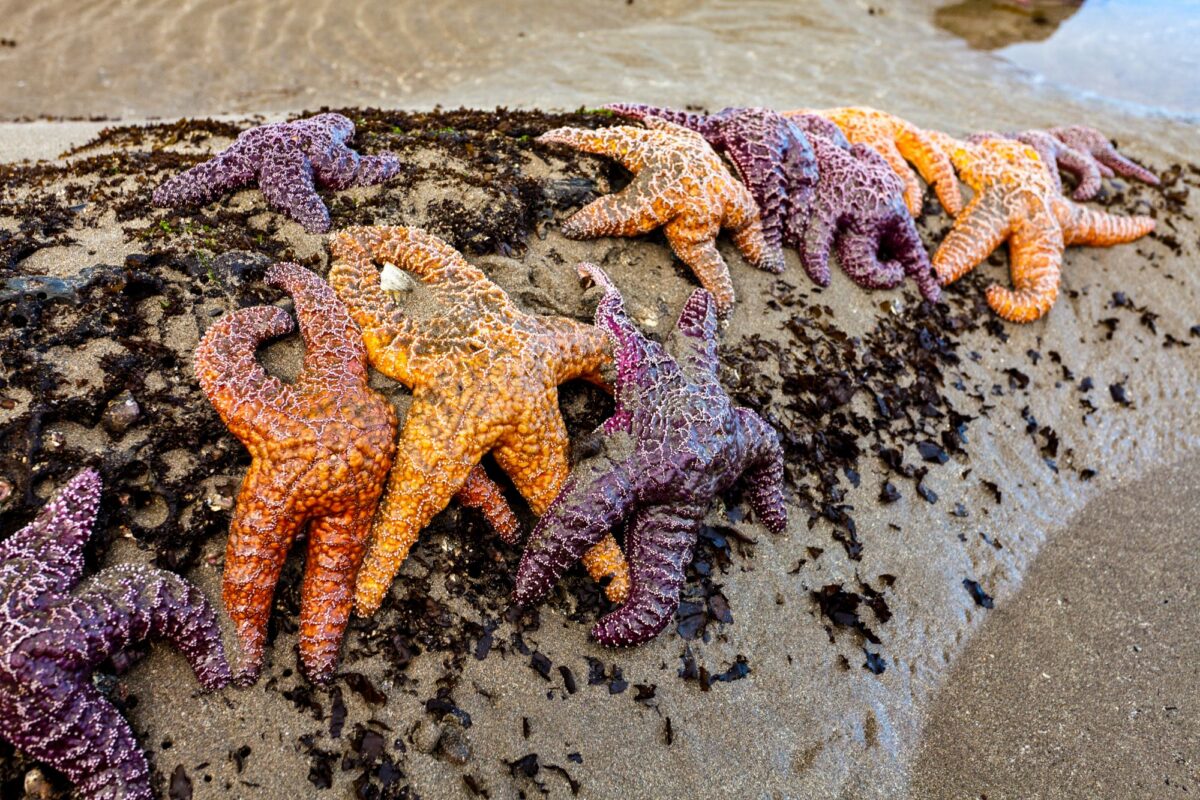
When the tide goes out, a whole different world appears along the coast. Tide pools reveal sea anemones waving their tentacles, crabs hiding in rocky crevices and sea stars clinging to the rocks.
These pockets of marine life offer a chance to get up close with coastal wildlife without needing any special equipment.
From California to Washington, there are plenty of places for beginners to explore. Here are three worth visiting, along with tips on when to go and how to enjoy the pools without disturbing the creatures that live there.
Fitzgerald Marine Reserve, California
About 20 miles south of San Francisco, Fitzgerald Marine Reserve in Moss Beach protects a rocky intertidal habitat filled with marine life. It’s a convenient introduction to tide-pooling for Bay Area residents and visitors.
Long before the area became a marine reserve, Indigenous Ohlone communities lived along the Moss Beach coastline. The Friends of Fitzgerald Marine Reserve recognizes the reserve as part of the ancestral homeland of the Ramaytush Ohlone.
The organization recommends visiting when the predicted low tide is 1 foot or lower, when more of the rocky habitat is exposed.
The usual ramp to the tide pools is closed indefinitely. For the alternate route, follow the California Coastal Trail from the reserve parking lot to Cypress Avenue, then use the Seal Cove stairs down to the beach. Check the county’s latest notice before visiting.
Yaquina Head, Oregon
For tide pools with a view, visit Yaquina Head Outstanding Natural Area, just north of Newport. At low tide, Cobble Beach beneath the historic Yaquina Head Lighthouse is a great place to look for sea anemones, mussels, barnacles, sea stars and sea urchins.
After exploring the pools, you can stop by the lighthouse and interpretive center to learn more about the area’s coastal wildlife and history. An entrance fee applies.
Access to Cobble Beach and the tide pools can be restricted during harbor seal pupping season and seabird nesting season. Check current notices, hours and lighthouse tour availability before visiting. Wear closed-toe shoes with good traction, and watch the surf as you explore.
Beach 4, Washington
Long before Olympic National Park existed, Indigenous peoples lived along the Olympic Peninsula’s coast. The National Park Service says eight tribes maintain traditional connections to lands in the park, including the Quileute and Quinault.
Beach 4 in Olympic National Park, near Kalaloch on Washington’s Olympic Peninsula, is another option for beginners. A short trail from Highway 101 leads down a bluff to the rocky shoreline, where you can look for sea stars and anemones at low tide. The descent and uneven terrain can be challenging, so visitors should go slowly.
Plan around the tide, not the clock
Before you go, check the local tide predictions and the site’s hours. Plan to arrive before low tide so you have time to explore while the water is receding.
Check the weather and surf forecast, too. Keep an eye on the ocean, watch for unexpectedly large waves and leave room to get back before the tide rises. If conditions look rough, save the trip for another day.
Observe animals without touching them, leave rocks and shells where you find them and watch where you step. Check each site’s pet rules before bringing a dog, and keep pets away from the pools.
Explore 3 Pacific Coast tide-pooling spots
From California to Washington, discover where low tide reveals some of the coast’s most fascinating marine life. Select a destination to learn what to expect before you go.
Always check current tides, surf conditions and access notices before visiting. Access and conditions can change.
Fitzgerald Marine Reserve
Moss Beach, California
A rocky intertidal reserve on the San Mateo County coast, Fitzgerald is a convenient Bay Area outing near San Francisco. At low tide, the retreating water uncovers pools tucked into the reef.
What you’ll see
- Sea anemones
- Crabs
- Sea stars
Know before you go
Go when the predicted low tide is 1 foot or lower.
Access change: The usual ramp to the tide pools is closed indefinitely, per a county notice dated Aug. 26, 2026. Follow the California Coastal Trail from the reserve parking lot to Cypress Avenue, then take the Seal Cove stairs down to the beach.
Before you explore
Check NOAA tide predictions (opens in a new tab)- Check the tidesAim for low tide and arrive before the lowest point.
- Watch the oceanKeep an eye on surf conditions and unexpected waves.
- Protect marine lifeLook without touching, collecting or moving animals and rocks.
- Watch your footingWear shoes with good traction and stay on safe surfaces.
Your home base for the great outdoors. Sign up for the Camp & Country newsletter
Keep the adventure going. Follow Camp & Country on Instagram, Facebook, X and Bluesky for outdoor inspiration, trip ideas and more.