
I’ve called North Carolina home for 25 years, and in that time, I’ve fallen head over heels for my adopted state and launched a career as an outdoor and hiking writer. The nature here is simply incredible.
To the west lie Great Smoky Mountains National Park (the country’s most visited national park) and the Blue Ridge Parkway, showing off the best of our mountains. To the east, where I live, Cape Hatteras National Seashore (the nation’s first) and Cape Lookout National Seashore provide stretches of pristine coastline to explore.
But it wasn’t these federal lands that jump-started my career. It was our state parks. I’ve been hiking, camping and paddling in most of North Carolina’s state parks, but two have captured my imagination and keep drawing me back: Gorges State Park, in a waterfall-filled pocket of the Blue Ridge Mountains, and Hammocks Beach State Park, where a kayak or seasonal passenger ferry can take you to unspoiled island shores.
Hammocks Beach State Park
Barrier islands line much of North Carolina’s coast, and near Swansboro, Hammocks Beach State Park gives you the chance to experience this dune-rich environment via paddle trails, island walks and campsites. Reached by boat through the Intracoastal Waterway and a maze of marsh creeks, Bear Island is the destination du jour for most visitors. Like me, they spend a little time exploring the 2.3 miles of mainland trails before hopping onto the seasonal passenger ferry for a quick ride or sliding into a kayak for a paddle to that remote patch of sand.
Check the ferry schedule before planning your trip. The park’s 2026 ferry season ends Oct. 25. Outside ferry season, visitors must arrange their own boat transportation to Bear Island; paddlers should account for wind, tides and currents.
Bear Island is home to campsites and 4 miles of beachfront to wander. The shoreline here is a dream for beachcombers as currents and tides conspire to deposit impressive shells — whelks, Scotch bonnets and scallops, for starters — in the sand.
But for me, the real show is overhead. Reserve a campsite on Bear Island — or a camper cabin at the Simmons Mainland Campground — and wait for night, when the dark sky takes over and reveals more stars than grains of sand in your shoe. The Milky Way, meteor showers, rocket launches and other celestial sights make the trip worthwhile.
Bear Island camping is available year-round, but the bathhouse closes from mid-November through March. Review the park’s camping information before reserving an off-season stay.
Gorges State Park
Western North Carolina is full of literal and figurative gems. In Sapphire (North Carolina’s full of sapphires, emeralds and rubies), Gorges State Park sparkles with 56 miles of hiking trails and an impressive 26 waterfalls.
The park sits along the South Carolina border at the northern end of beautiful Lake Jocassee, in Transylvania County — a spooky-sounding spot known as the “Land of Waterfalls.” At Gorges, you can choose between easy woodland walks and strenuous waterfall hikes. It’s up to you.
The park has two main access areas: Grassy Ridge to the west and Frozen Creek to the east. At Grassy Ridge, the short, steep Bearwallow Falls Trail leads to an overlook of Upper Bearwallow Falls. The trail is 0.2 miles each way and rated strenuous. The wooded trail really shows how rugged this landscape can be.
Also starting at Grassy Ridge, the Rainbow Falls Trail crosses out of the park into Pisgah National Forest. There, the two most impressive falls are the 150-foot Rainbow Falls, whose mist can cast rainbows into the air around you, and Turtleback Falls, which makes a gentler tumble over a rock nose. Bring a raincoat; it can get a little damp.
The hike to Rainbow Falls is 3 miles round trip and rated strenuous; continuing to Turtleback adds distance. Along the way, you’ll also pass Hidden Falls, outside the state park. Follow posted guidance and stay on designated trails around the waterfalls.
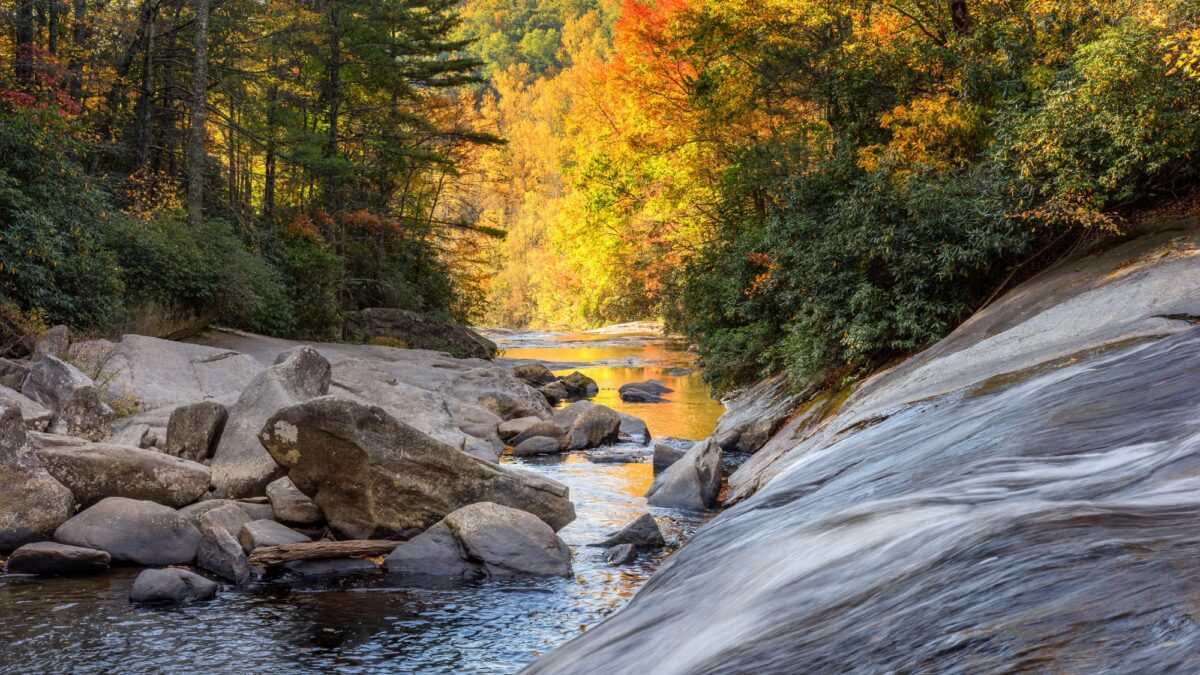
As you explore other trails — including connections to the Foothills Trail, which crosses between North Carolina and South Carolina — you’ll find additional falls large and small and plenty of views that’ll stop you in your tracks. On many a fall visit, I’ve found myself dumbstruck by the leaves, the mist and the quiet of the forest here.
Bring your camping gear and spend a day or two exploring the area. The park’s family campground offers tent and RV sites, plus camper cabins. Check the park’s alerts before reserving: its website currently lists backcountry campsites and Chestnut Mountain Road as closed.
As with its coastal cousin, Gorges is a great place for stargazing. This pocket of North Carolina is remote and dark, making the celestial show shine all the brighter. This pocket of North Carolina is remote and dark, making the celestial show shine all the brighter.
Your home base for the great outdoors. Sign up for the Camp & Country newsletter