
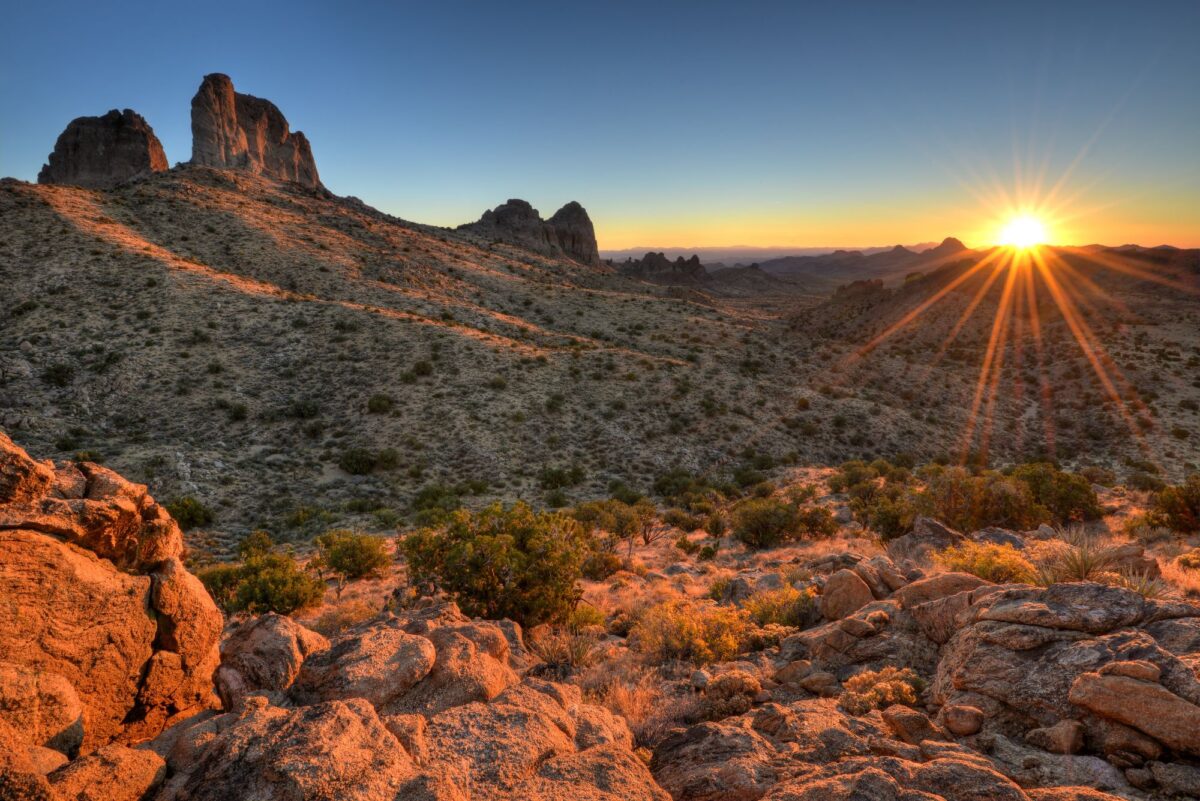
The spectacular stretch of desert that makes up Mojave National Preserve is full of stunning contrasts: cactus gardens and evergreens, rocky peaks and sand, arid salt flats and colorful wildflowers. The landscape is dramatic and unforgiving, with cinder cones, lava beds, granite boulders, rugged canyons and few springs.
Indigenous people have lived in and traveled through this desert for thousands of years. Later, homesteads and mining camps came and went, while California-bound settlers hurried through to greener lands. That pass-through mentality exists today, with many drivers using the preserve’s paved roads to travel between destinations. But slow down and a closer look will reveal shining sand dunes, limestone caverns and one of the largest and densest Joshua tree forests in the world.
Plan for the preserve’s remoteness
Mojave National Preserve is vast, protecting nearly 1.6 million acres of open desert between Joshua Tree National Park and Death Valley National Park. It is the third-largest unit of the National Park System in the contiguous United States. A visit here can feel daunting, especially considering its remoteness.
For perspective, gas, food and lodging are all outside the preserve, in desert communities that read like the lyrics of a country song: Baker, Las Vegas, Needles, Barstow and Twentynine Palms. Cell phone service is sporadic and unreliable. Potable water is available at Kelso Depot, Hole-in-the-Wall Information Center and Hole-in-the-Wall Campground. Otherwise, spending time here means bringing everything you need.
Hike Kelso Dunes
Start your exploration with a visit to the Kelso Dunes. These wind-sculpted sand hills are the preserve’s most popular hike. A 3-mile round-trip trail climbs 600 feet to a summit with views across a mind-boggling expanse of undulating sand. If you want to camp nearby, the National Park Service lists several undeveloped campsites along Kelso Dunes Road, though camping is prohibited at the trailhead and in other designated areas around the dunes.
Tour Mitchell Caverns
Or plan a visit to Mitchell Caverns, a set of limestone caves in Providence Mountains State Recreation Area, which sits within Mojave National Preserve. The caves are studded with an impressive array of stalagmites and stalactites. Entry is available only by guided tour, with reservations required. Two gaping openings in the rocky Providence Mountains form the cave entrance, known to the Chemehuevi as the “eyes of the mountain.” A tiny reservation-only five-site campground below the caves offers solitude and desert views, particularly impressive at sunset.
Drive Cima Road
A drive along Cima Road strikes into the heart of a dense Joshua tree forest. In 2020, the lightning-sparked Dome Fire burned about 25% of the contiguous forest and killed an estimated 1.3 million Joshua trees. Despite the devastation, much of the forest still stretches across the landscape, and restoration efforts are underway. For your scenery-viewing base camp, Hole-in-the-Wall and Mid Hills campgrounds both require reservations.
Another reason to slow down: road conditions can be rough, and some routes are bumpy or potholed. Check current conditions before you go. Take it easy, take a look around and stop to smell the cactus.
Your home base for the great outdoors. Sign up for the Camp & Country newsletter