
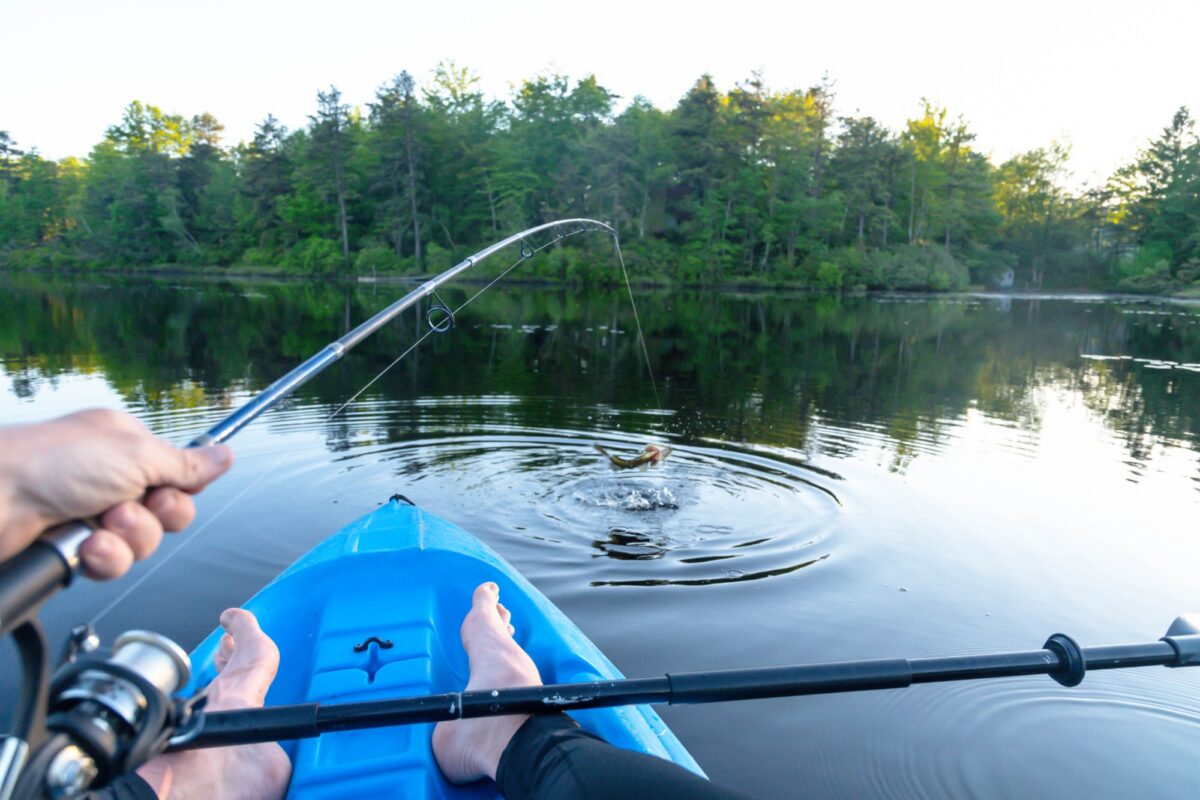
Fishing kayaks are popular for good reason. Their smaller size and affordability make them an attractive alternative to traditional boats. My first fishing kayak fundamentally changed the way I fish. After fishing from it for well over a decade, I’ve learned what works and what doesn’t. These are the things I think first-time buyers should consider before choosing one.
Hull style
Fishing kayaks come in two primary styles: sit-on-top and sit-in. Sit-in kayaks are typically lighter than comparable sit-on-tops and more efficient to paddle. They also provide better protection from the elements, especially with a spray skirt.
The downside to sit-in kayaks is that you have less freedom to move around, and gear stored in rear hatches can be harder to reach while fishing. In my experience, they’re also less comfortable for long periods of fishing. Most aren’t designed for standing while fishing.
The other popular style is sit-on-top. Many fishing models are wide and stable enough to stand in, and they often make it easier to access gear while you’re on the water. My kayak is wide enough for me to stand and make casts to tight cover. The extra legroom and quality seat also make it more comfortable for a full day of fishing. Sit-on-tops also commonly offer options for adding fishing accessories.
Sit-on-tops are typically heavier than comparable sit-in kayaks, which can make transport challenging. They also leave you more exposed to the elements. If a wave hits you, you’re going to get wet. It’s happened to me several times.
Length
Shorter kayaks generally offer better maneuverability, making them well suited for smaller freshwater streams and rivers. I would also go shorter for shallow areas with a lot of timber cover. The trade-off is that shorter boats generally don’t track as straight or cover distance as efficiently as longer ones.
For open water where you’ll be covering more distance, a longer kayak generally tracks straighter and moves more efficiently. However, there is a downside. Even with a rudder system, my 12-foot Old Town turns with all the grace of a brick. That means it’s not ideal for tighter, moving streams.
Propulsion
It is possible to go fishing using nothing but a paddle for propulsion. It works best on smaller lakes, ponds and other relatively calm water. For larger bodies of water, I prefer a propulsion system that lets me focus more on fishing.
Pedal-drive fishing kayaks use your feet to power either a propeller or fins, leaving your hands free to fish. In my experience, fins are less likely than a propeller to get hung up in underwater vegetation. Some fishing kayaks also come with or can be outfitted with electric motors, though those systems add cost and weight.
Another option is an electric trolling motor. Some models offer GPS features such as Minn Kota’s Spot-Lock, which uses the motor to help hold the kayak in position. That allows you to focus on the fish rather than maintaining your position. The biggest downside to buying a kayak with a trolling motor system is the added cost.
I would recommend that most new kayak anglers start nonmotorized and upgrade down the line if they need to.
Storage and transportation
How you transport a kayak depends on its size and weight, your vehicle and whether you can safely load it yourself. A roof rack can work well for lighter kayaks, while heavier fishing kayaks may be easier to transport on a trailer. Think about transportation before you buy, especially whether you’ll be able to load, unload and launch the kayak on your own.
If storing indoors, measure your available garage space first to avoid surprises. Consider space-saving solutions like wall racks and ceiling hoists. You’ll also want to make sure the rack or hoist is properly installed and rated to support the weight of your kayak. Fortunately, I have the space to keep my kayak on the trailer indoors when not in use.
Kayaks can be stored outside, but they need protection from sunlight and moisture. UV exposure can degrade hull materials over time, while prolonged exposure to rain and snow can also cause damage. If you’re using a tarp, suspend it above the kayak rather than wrapping it tightly around the hull, which can trap moisture. Make sure rain or snow can’t collect in or on the boat.