
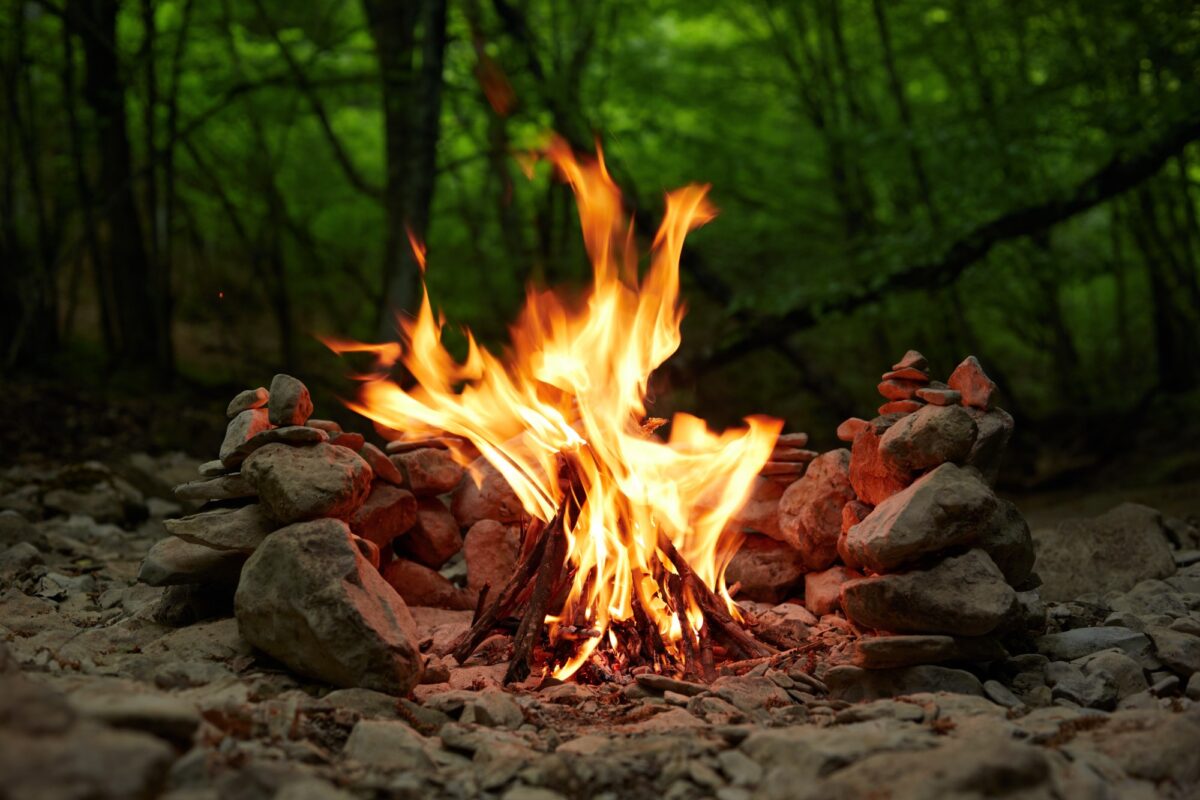
There is a scrumptiousness to a campfire up north. Or in your backyard, for that matter. Woodsmoke curling round you on a nippy autumn night, or escaping in willowy wisps beneath winking winter stars. The sappy snap, crackle and pop of pine. A brat sizzling over glowing birch coals, a marshmallow turning golden, both kissed by woodsmoke.
Every campfire has a life of its own. A tentative flicker gathers strength, then settles into glowing embers. Stories unfold, conversation wanders and time loses its urgency. Coaxing a fire along takes little more than patience and knowing when to feed it, let it be and put it safely to rest.
Before the first spark
Check fire rules for your location with the campground, land manager or local fire department, and check the weather. Even designated rings may be off-limits. Skip fires on windy or very dry days.
Use an established ring where permitted, keeping tents, gear and other flammable materials at least 15 feet away, or farther if local rules require. Avoid overhanging branches and dry vegetation. Have a bucket of water and a shovel ready.
Buy firewood locally to avoid transporting invasive insects and diseases. Choose dry, seasoned wood; damp logs smolder and smoke rather than burn cleanly.
READ MORE: Quiz: What’s your camping style? Find your comfort zone
READ MORE: Planning your first camping trip? How to choose a site, book and prepare
Give it a good beginning
Fire needs heat, fuel and oxygen. Start small.
- Gather three sizes of fuel. Tinder (tiny dry twigs, fallen birch bark curls or wood shavings), kindling (pencil-sized sticks) and split logs. Collect fallen material only where permitted; never strip bark from trees.
- Build a loose teepee. Place tinder in the ring and lean kindling around it, leaving room for air.
- Light low. Ignite tinder near its base with a match or lighter. Let the tiny orange flames establish themselves.
- Feed, don’t smother. Gradually add thicker sticks, then logs. Never use gasoline or other liquid accelerants.
Troubleshooting: what your fire is telling you
As kindling catches and logs crackle and settle, your fire finds its voice. Turns out, it has a few things to tell you.
Too much smoke? The wood may be damp or airflow restricted. Try smaller, drier pieces, leaving room between them for air to circulate.
Snapping and spitting? Resinous pine throws sparks. Watch the wind and keep your distance.
Glowing red coals? You’ve reached the sweet spot. Hardwoods produce long-lasting coals for roasting meats and sweets. Steady heat beats tall flames, unless you like your marshmallows charred beyond recognition. To each their own!
Keep your fire small and never leave it unattended, even briefly. Supervise children and keep them and pets safely back.
Give it a good ending
Stop feeding the fire well before bedtime. Following Smokey Bear’s guidance, drown it with water, stir the ashes and embers with your shovel, then soak again. Wet and stir any partially burned wood, too.
Check for residual heat by holding the back of your hand above, not against, the ashes. Repeat the soaking and stirring until no heat remains.
Never assume a fire is out because the flames have disappeared. Embers can stay hot beneath ash. If it’s too hot to touch, it’s too hot to leave.
With a little know-how, a good campfire leaves cold ashes, the warmth of an evening well spent and maybe a story worth retelling. Definitely a memory worth keeping.
Oh, and that deliciously smoky fleece? Don’t be in a hurry to wash it.
Your home base for the great outdoors. Sign up for the Camp & Country newsletter
Keep the adventure going. Follow Camp & Country on Instagram, Facebook, X and Bluesky for outdoor inspiration, trip ideas and more.