
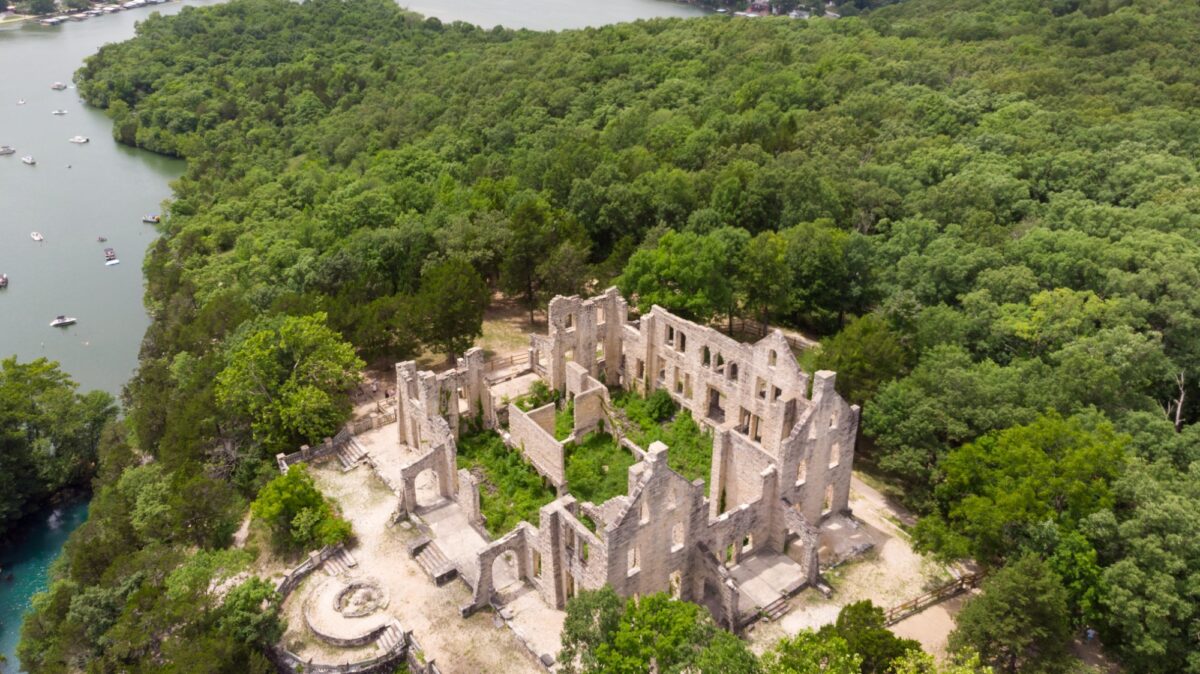
Ha Ha Tonka State Park, located just outside Camdenton, Missouri, is widely celebrated as one of the gems of the Missouri State Parks system. It has been named “the most beautiful place in Missouri” by Condé Nast Traveler and was once voted the fourth-best state park in America by USA Today readers, so you know it’s going to be good. And popular.
According to regional Ozark folklore, “Ha Ha Tonka” is said to mean “laughing waters” in the Osage language, a reference to the park’s massive natural spring, which discharges more than 48 million gallons of water per day.
But that’s not why most people visit. They are there for the park’s well-photographed castle ruins. In the early 1900s, wealthy Kansas City businessman Robert McClure Snyder began purchasing land in the area with plans to construct a spectacular European-style country escape.
Things didn’t go to plan. Snyder died in an automobile accident in 1906, and his sons continued the project, completing the castle in 1922. A fire gutted it in 1942. Today, the castle’s skeletal stone walls, carriage house ruins and water tower are all that remain of that dream. That, and some great views of Ha Ha Tonka Spring and Lake of the Ozarks.
While the short walk up to the ruins is certainly worth it, there is far more to this park off the paved path.
Explore Ha Ha Tonka’s geologic wonders
Beyond the castle, Ha Ha Tonka’s rugged terrain features a massive natural bridge you can walk beneath and the Colosseum, a 150-foot-deep sinkhole formed by the collapse of a giant cavern. According to local legend, the Colosseum was once used for tribal meetings and church revivals. The collapse also created a gorge with 250-foot-high bluffs overlooking Ha Ha Tonka Spring. The area’s caves have some colorful history, too: In the 1830s, a local mill operator named Garland was associated with counterfeiters who used caves in the area.
Hit the hiking trails
The park has more than a dozen designated trails winding through its forests, glades and karst landscape, with several accessible from the area around the ruins.
Popular routes include the 1.4-mile Spring Trail, which includes a strenuous section of 316 wooden steps climbing 200 vertical feet, and the 0.4-mile Island Trail, which leads to the confluence of Ha Ha Tonka Spring and Lake of the Ozarks. The 0.6-mile Colosseum Trail takes you beneath the natural bridge and through the 150-foot-deep Colosseum Sinkhole. For a longer outing, the rugged 6.5-mile Turkey Pen Hollow Trail traverses limestone glades and woodlands and passes an intermittently wet seep area.
Paddle through the park
On the water, the 13.3-mile Big Niangua River Trail takes paddlers past points of interest including Onyx Cave, the Tunnel Dam Powerhouse and spring-fed creeks named after members of the 1830s counterfeiting gang. One- and two-person kayaks can be rented from the visitor center from April through October during visitor center hours.
Fish the Lake of the Ozarks
If you want to fish, the mix of cold spring water and the warmer main body of the lake creates a seam that can attract fish, including hybrid striped bass. Fishing is allowed at several access points around the lake, including an accessible fishing dock near the Lake Picnic Area, but fishing is not permitted in Ha Ha Tonka Spring itself.
Cast from the shoreline or fishing dock, or rent a kayak to explore the lake along the bluff face.
What to know before you go
Ha Ha Tonka State Park can be reached by road or by boat from the Lake of the Ozarks. The park is open year-round, with grounds open from 7 a.m. to sunset April through October and 8 a.m. to sunset November through March. Admission is free.
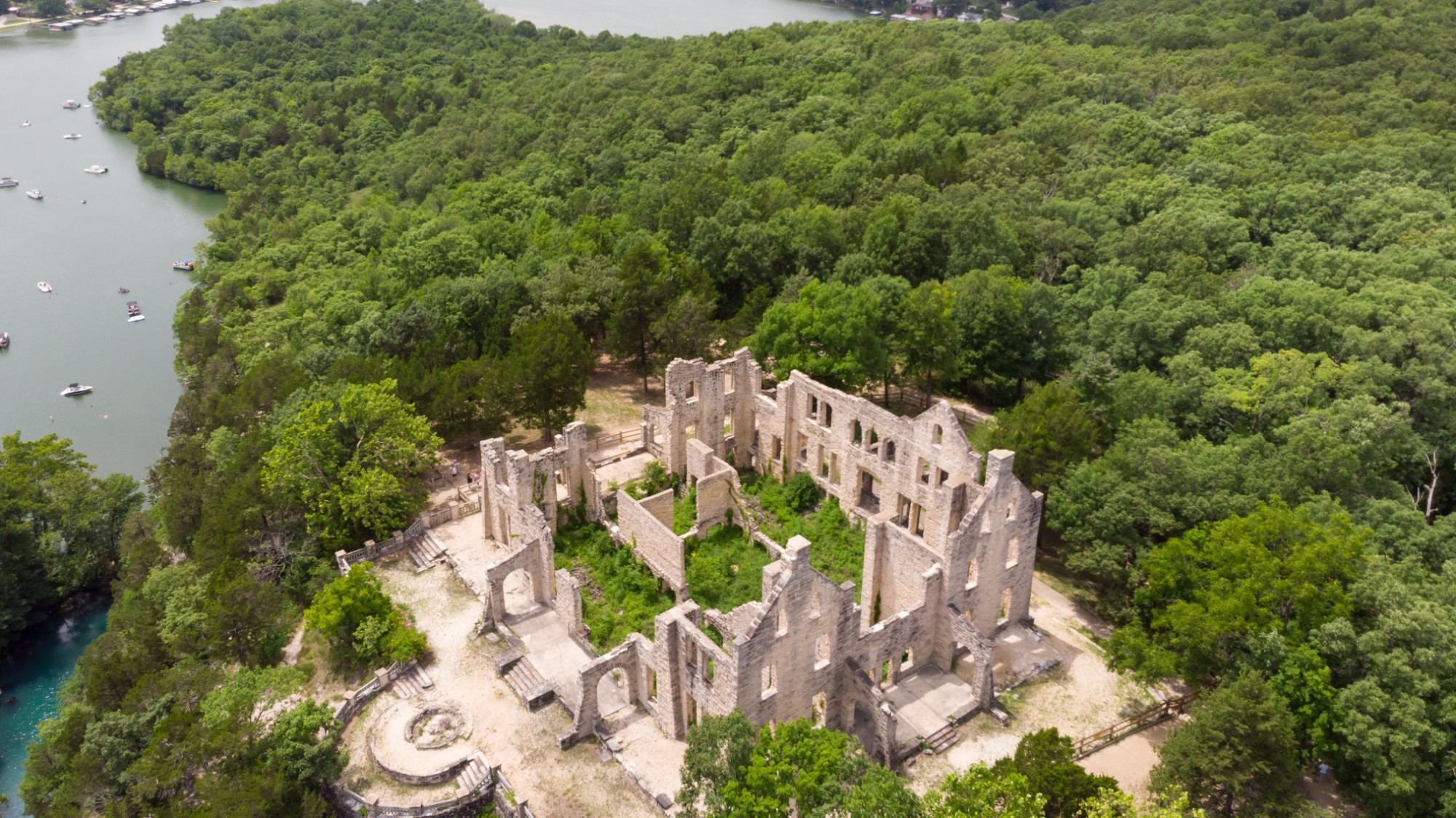
Short walks and longer hikes here are browsing groups, not official difficulty ratings. Short routes can still have challenging terrain.
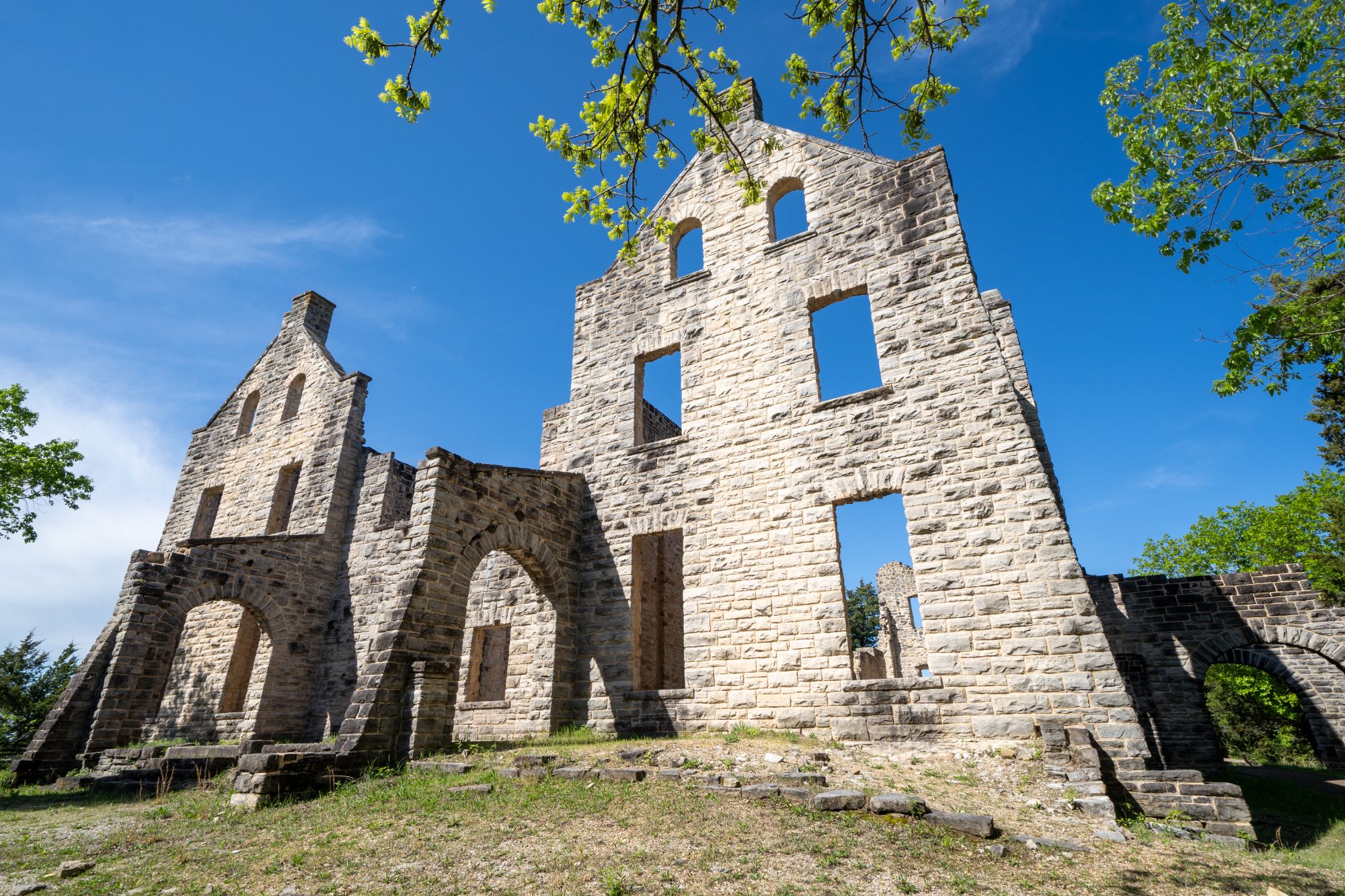
Credit: Melissa Kopka/iStock/Getty Images Plus
Castle ruins
Short walk
A short walk leads to the stone castle ruins, with views of Ha Ha Tonka Spring and Lake of the Ozarks.