
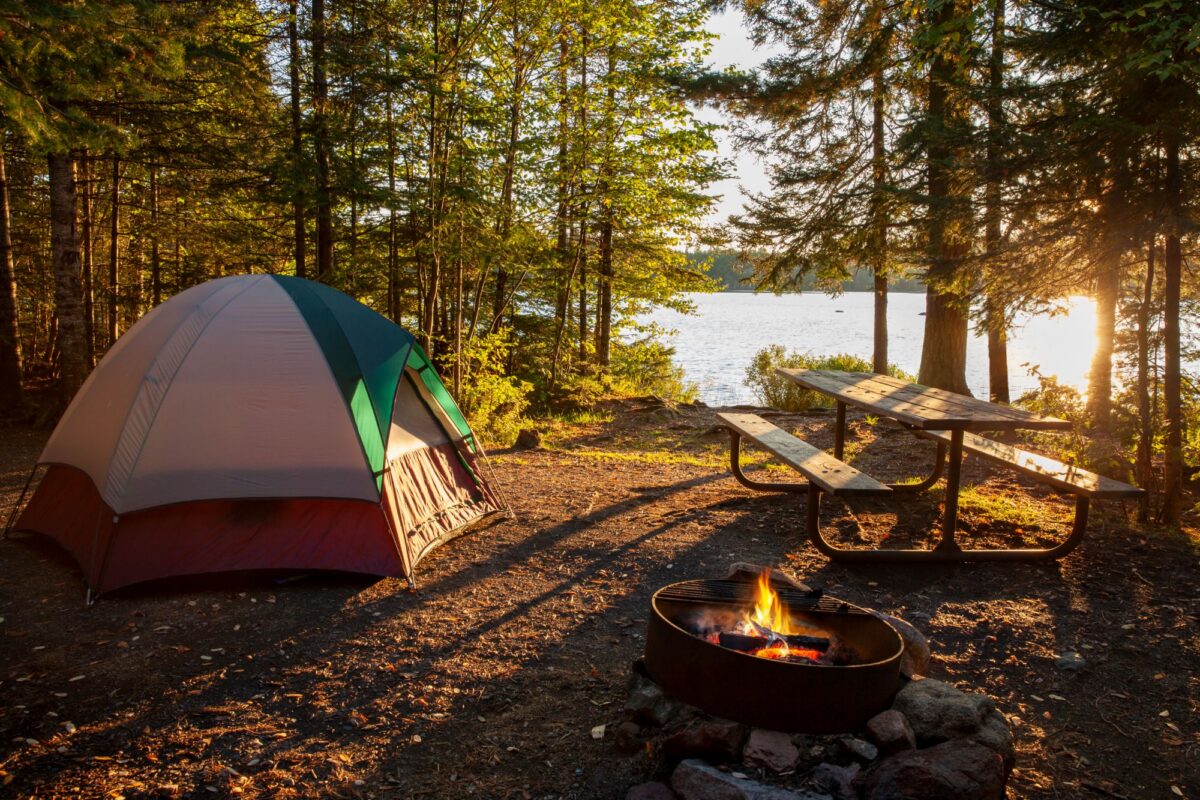
More than 2.2 million North American households camped for the first time in 2025, according to Kampgrounds of America’s 2026 Camping & Outdoor Hospitality Report. Their reasons vary. Some want to break up with their phones for a weekend. Others want to bond with their family in a new environment or find a more budget-friendly way to vacation. Some got inspired by social media.
“The best first camping trip is the one that gets you outside and makes you want to go again,” says Diane Eichler, senior vice president of marketing at Kampgrounds of America. “So if that is in a deluxe cabin with linens and some glamping, then go for it … pick the experience that matches your comfort level today, not the one you think that you’re supposed to do.”
If you’re curious about camping, too, here’s what you need to know to plan your first trip.
Pick what kind of camping you want to do
Before choosing a destination or booking a campsite, ask yourself what kind of camping experience you want and who’s joining you. Are you bringing the kids, your dog or friends? Or are you picturing a “Man vs. Wild” adventure (minus the being stranded part)?
Think about your comfort level, too. Would you rather avoid the hassle of buying or renting gear? Do you want to enjoy nature but not sleep outdoors? Or are you ready to learn how to pitch a tent?
These options overlap: You can camp in a tent at a drive-up site, and some cabin stays qualify as glamping.
- Car camping: One of the easiest ways to start, car camping lets you drive up to or park near your campsite, so there’s no hauling supplies down a trail. See campground rules first if you plan to sleep in your vehicle.
- RV camping: Think of it as home on wheels, whether it’s a motorhome, camper van or travel trailer. Amenities vary, so check what’s included, from sleeping space and cooking facilities to a bathroom. Not sure you’re ready to buy one? Renting is a good way to find out if the RV life is for you.
- Cabin camping: Staying in a cabin is a good fit if you don’t own camping gear or aren’t quite ready to sleep outdoors. You still get the campground experience, with a solid roof overhead. Some cabins are bare-bones with just beds, while others come with electricity, a kitchen and a private bathroom.
- Glamping: Short for “glamorous camping,” this is camping without roughing it. Think yurts, upscale cabins or even treehouses, often with real beds and, depending on where you go, a bathroom, kitchen and electricity.
- Tent camping: The traditional route. Practice your setup at home before you go, and for your first trip, pick an established campground with the facilities you need so you’re not figuring it all out in the backcountry.
Find your camping comfort zone
The guided quiz needs JavaScript, which isn’t running in this view. You can still compare camping styles and use the checklist below.
View the camping comparison and checklist
Camping styles at a glance
- Drive-up tent campingPark at or near your site and sleep in a tent. Rented or borrowed gear can work. Setup is the most hands-on, so practice pitching the tent first.
- RV campingSleep in an RV or camper at a campground. A rented or borrowed unit can work for a first trip. Hookups and operating instructions need attention.
- Cabin campingA built shelter that ranges from basic, with beds, to fully furnished. Check what is supplied, such as bedding and cooking facilities.
- GlampingA furnished or pre-set-up stay that can overlap with cabin stays. What is included varies.
Car camping describes access to a campsite, not necessarily sleeping in a vehicle. Neither an RV nor a glamping stay automatically guarantees a private bathroom or full kitchen.
Preparation checklist
Before you book
Before you leave
This is a planning aid, not a complete safety checklist. Confirm facilities, rules and current conditions directly with your campground.
Plan the trip you want
Your first camping trip doesn’t have to be an adventure in the wilderness. “The goal of your first camping trip isn’t to master camping,” Eichler reminds newcomers. “It’s to discover that you love it and that you love being in the outdoors.” Start with the details that would make the trip most enjoyable for you.
- Setting: Do you picture a lively campground where you can meet other campers, or a remote spot where you can unplug? And consider the scenery too, whether you want to wake to a lakefront, mountain view, the woods or desert.
- Distance: You don’t have to go far to feel like you’ve gotten away, says Jason Vaughan, executive director of the Pennsylvania Campground Owners Association. “I think people realize when they get away from their house, even 10 or 15 miles, what the disconnect is,” he says. “When you’re not home, not worried about the laundry, the grass, the lawn and everything you have to do with the house. The close-to-home trip can be a very relaxing and rewarding time.”
- Trip length: Vaughan recommends new campers opt for a three-day weekend. It can give them extra time to explore the campground and get comfortable with the experience.
- Season: Think about the conditions you’d be most comfortable camping in. Research typical daytime and nighttime temperatures and precipitation for your destination, then check the forecast before leaving. Conditions vary widely by region and elevation.
- Crowds: Summer, holidays, festivals and astronomical events like an eclipse can mean bigger crowds, higher prices and limited availability, especially at popular national parks. For fewer crowds, consider weekdays or dates outside the busiest season, and confirm that the campground and facilities you need will be open.
- What you’ll do there: Are you hoping to hike, fish, paddle, swim or simply hang out with some books and puzzles at the campsite? Will the campground be your base for exploring nearby amusement parks and other attractions?
Choose a campground that fits your needs
Everyone camps differently, and the kind of trip you’re picturing will help you decide which features you can’t do without. Before you book, ask yourself which of these matter most to you.
- Amenities: Campgrounds offer different amenities, like drinking water, restrooms, hot showers, laundry, RV hookups, Wi-Fi and food storage boxes (called bear boxes). It’s also worth reading recent visitor reviews to get a sense of how well facilities are maintained. If you’re bringing an RV, confirm which hookups are available and whether they’re included in the site fee.
- On-site staff: Eichler recommends first-timers choose a staffed campground, such as KOA’s campgrounds, so there’s someone to answer questions and help them navigate the basics. Not every campground offers that, so check whether staff will be around during your stay and where to go if you need help after hours.
- Connectivity: Cell service can be spotty in remote areas, and campground Wi-Fi may not reach every site. If you need to stay connected, check your carrier’s coverage map or a tool such as CoverageMap, then ask the campground about service at your intended site.
- Access to stores and restaurants: If you don’t want to pack every meal or your entire kitchen, pick a campground within a short drive of grocery stores or restaurants. Some also have their own convenience store with groceries and supplies, which comes in handy when you realize you forgot the lighter.
- Pet policies: If you’re bringing your dog, look into whether pets are allowed and where they can actually go. Some campgrounds have designated pet areas or dog parks, while others restrict pets in certain areas or require leashes at all times.
- Activities and recreation: Some campgrounds offer swimming pools, basketball courts, playgrounds, hiking trails, planned activities and the occasional air-conditioned arcade. Others are more rustic, with little to do but enjoy the quiet.
- Campsite terrain: Look for a site with relatively flat, even ground to make pitching a tent for the first time a smooth experience. Go over site descriptions and photos for slopes, rocky ground or other potential challenges.
- Campsite location: Use the campground map to see how close a site is to restrooms, the entrance and neighboring campers. Tree cover can provide shade on hot days, while extra space between sites may offer more privacy.
Review campground rules and policies
Read through the campground’s rules twice: once before you book and again before you pack the car. Rules vary by campground, and a quick read can spare you surprises when you arrive.
- Fires and firewood: If camping isn’t complete without a campfire and s’mores, confirm whether fires are permitted before you go. Fire bans and restrictions may be in place during dry conditions. Campgrounds may also require you to buy firewood on-site or from approved local vendors to help prevent the spread of invasive insects and tree diseases.
- Type of camping allowed: Confirm that your particular site allows your setup, whether that’s a tent, an RV or sleeping in your vehicle.
- Age restrictions: Check minimum ages for booking and checking in, along with any restrictions on children.
- Banned items: Some places prohibit items you might not expect, such as hammocks, clotheslines and drones.
- Quiet hours: Most campgrounds enforce overnight quiet hours, which vary by site. Know when they start so you’re not the neighbor everyone remembers.
Reserve your spot early
The earlier you book, the better your shot at the campground you want. Keep these details in mind:
- Know where to book: Begin with the campground’s official website for reservation instructions. Public campgrounds may use Recreation.gov or a state park reservation system, while private campgrounds may use their own booking platforms or offer membership programs with reservation perks.
- Know when to book: Check the campground’s reservation window and release time. Some national park campsites open six months ahead, while others become available closer to arrival; state park systems also vary. For special occasions at independently owned campgrounds, Vaughan recommends aiming to book 12 to 16 weeks ahead. If you’re flexible, he adds, some of the association’s member campgrounds list last-minute openings for the upcoming week and holidays.
- Read the fine print: Take time to review the cancellation rules and look over check-in and checkout times and any limits on guests or vehicles per site. Watch for additional charges for pets, firewood, extra vehicles or amenities that may affect your trip budget.
Pack the essentials
Renting gear can help you figure out how you like to camp before investing in your own. Select REI locations and other outfitters offer rentals; check local availability and inventory.
Before packing, confirm what your campsite or accommodation includes. Use the list below as a starting point, adjusting it for your setup and the forecast.
- Shelter and sleep: If you’re tent camping, bring a tent, sleeping bag and sleeping pad suited to the expected conditions, plus a pillow. An extra blanket can add comfort on chilly nights.
- Basics: Drinking water, toilet paper, toiletries, sunscreen and insect repellent. If you’re bringing a pet, don’t forget waste bags. Dry bags and a tarp can also help keep essentials dry and protect gear, like a bike or grill, from rain and moisture.
- Bathroom essentials: If you’re camping somewhere without toilets, you may need human-waste disposal bags or other approved supplies. Read up on local rules for proper disposal.
- Food: Easy-to-pack meals and snacks, such as sandwiches, hot dogs on a stick, foil packet dinners, trail mix or ready-made camping meals.
- Cooking supplies: If they’re not provided, pack a cooler, stove, compatible fuel, cookware, plates and utensils suited to your meals. Check whether current fire restrictions allow your stove, and bring a lighter or matches if needed.
- Food storage and cleanup: Follow the campground’s food-storage rules for food, trash and scented items such as toiletries. Bring trash bags and any required storage containers; don’t keep food in your tent.
- Safety and lighting: Bring a first-aid kit, flashlight or headlamp, and extra batteries so you’re prepared for minor mishaps and navigating after dark.
- Clothing: Pack weather-appropriate layers, sturdy waterproof shoes, extra socks and rain gear to stay comfortable if temperatures change or the weather turns.
- Electronics and navigation: Bring a phone charger, portable power bank and downloaded maps or directions in case cell service is unreliable.
- Entertainment: Pack books, cards, games or puzzles for downtime at the campsite.
Your home base for the great outdoors. Sign up for the Camp & Country newsletter