

California’s state park system includes 280 park units, spanning deserts, coastline, mountains, redwoods and nearly every kind of landscape in between. With more than 340 miles of coastline, 15,000 campsites and thousands of miles of trails, the system offers plenty of places to experience California’s landscapes under the night sky.
As a co-author of Moon Best of California State Parks, I’ve explored parks across the state. Here are a few of my favorite state park destinations for astronomers, astrophotographers and anyone who appreciates what the California landscape holds after sunset.
Mount Tamalpais State Park
Just north of the Golden Gate Bridge, Mount Tamalpais State Park spans 6,300 acres and surrounds Muir Woods National Monument. For sweeping daytime views of the Bay Area, drive toward East Peak and hike the 0.75-mile Verna Dunshee Trail.
On the way up to East Peak, stop by the Mountain Theater. Built of natural stone in the 1930s by the Civilian Conservation Corps, the 3,750-seat outdoor amphitheater hosts astronomy programs on select nights. Pantoll and Bootjack campgrounds along Panoramic Highway offer places to stay overnight nearby.
Van Damme State Park
I don’t usually recommend stargazing spots on the California coast because the fog can be unpredictable, but I’ll make an exception for Van Damme State Park in Mendocino County. The park is home to a pygmy forest, the scenic Fern Canyon trail system and a beach cove that’s perfect for watching the sunset. If you visit in early August and get a campsite in the 40s in the Highland Meadow Upper Loop, you may see the Big Dipper perfectly framed across the meadow from your tent on a clear night.
Emerald Bay State Park
On the southwestern side of Lake Tahoe, Emerald Bay State Park is home to one of the region’s most recognizable landscapes, with Fannette Island rising from the water. At Lake Tahoe’s 6,220-foot elevation, staying the night at Emerald Bay’s Eagle Point Campground can put you close to the constellations.
Emerald Bay isn’t the only great Lake Tahoe spot to see the night sky. Tahoe Adventure Company, based on the North Shore, offers guided kayak and hiking tours focused on the night sky.
Pigeon Point Light Station State Historic Park
You wouldn’t think Pigeon Point Light Station State Historic Park would be a good place to stargaze, but the on-site HI Pigeon Point Lighthouse Hostel promotes just that. Perched on the edge of the Pacific Ocean, the 115-foot lighthouse was first lit in 1872 to help guide ships along this stretch of coast.
For overnight hostel guests, Pigeon Point gets quite dark after the state park closes to the general public at sunset. The night sky is celebrated here, with outdoor lights directed toward the ground and red or amber lighting used to help preserve the darkness. This can be kind of creepy when you’re staying there by yourself, as I was, but around a new moon, photographers and astronomers come to capture the Milky Way behind the famous light station.
With a telescope, you may even be able to see Jupiter’s moons or Saturn’s rings. I personally love whale watching from the hostel’s hot tub during the day, but stargazing from the hot tub at night is incredible, too.
Mono Lake Tufa State Natural Reserve
East of the Sierra Nevada, the Mono Lake Tufa State Natural Reserve is home to an ancient inland lake about 2.5 times as salty as the ocean. Where calcium-bearing freshwater springs interact with the lake’s carbonate-rich water, they form the calcium carbonate towers known as tufa.
The Mono Basin’s remote setting makes it a great place for night-sky viewing. Because the state reserve’s day-use areas close at sunset, check current access information before heading out after dark. The surrounding Mono Basin National Forest Scenic Area offers additional public lands around the lake.
McArthur-Burney Falls Memorial State Park
At McArthur-Burney Falls Memorial State Park, Burney Falls, famously called “the eighth wonder of the world” by Theodore Roosevelt, is a 129-foot cascade fed by springs that supply about 100 million gallons of water each day. Far from city lights, the park offers dark skies where the Milky Way can be visible on clear nights.
The park also has hiking trails, campsites and 24 one- and two-room cabins. The nearby Pioneer Cemetery Trail follows a historic wagon route on a relatively easy 1.6-mile round-trip hike.
Anza-Borrego Desert State Park
Spanning nearly 650,000 acres of badlands, rocky canyons and rugged desert, Anza-Borrego Desert State Park is the largest state park in California and the second-largest state park in the country. It has 500 miles of dirt roads, 110 miles of hiking trails and 12 designated wilderness areas. In January 2018, it was designated an International Dark Sky Park in recognition of its dark skies and efforts to limit light pollution.
Across Anza-Borrego, clear nights can reveal the Milky Way and a sky full of stars.
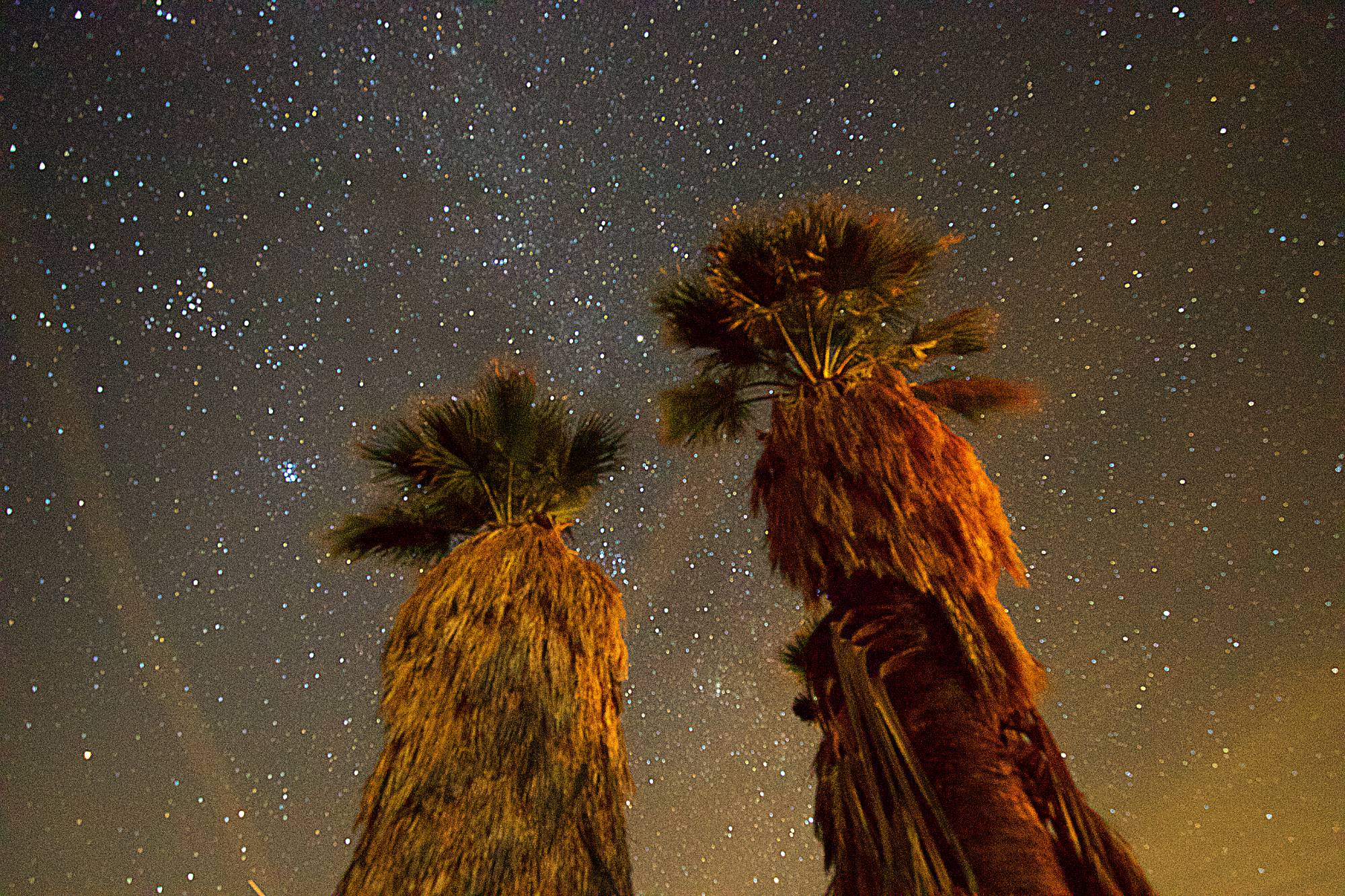
California after dark
Seven state parks. A whole universe overhead.
From desert skies to coastal cliffs and Sierra lakes, discover seven California landscapes worth seeing after sunset.
Explore the parksHours and nighttime access vary by park.
Explore the seven parks
Photograph unavailable.
Approximate locations. Select a marker to view a park.
The seven parks
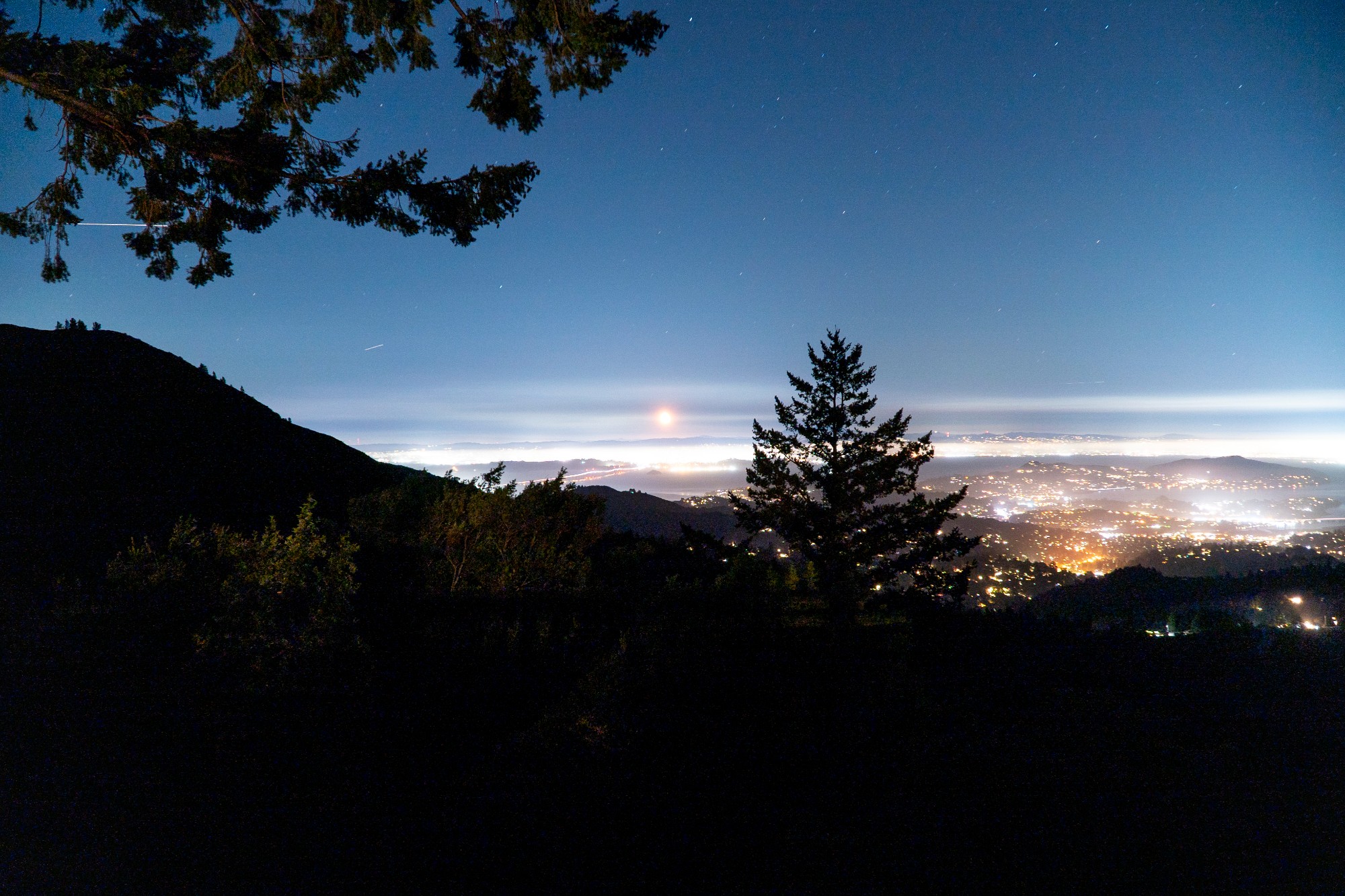
Mount Tamalpais State Park
Marin County, Northern California
Above the bustle of the Bay Area, Mount Tamalpais offers mountain scenery and occasional opportunities to explore the night sky through organized astronomy programs.
The glow of Bay Area city lights is part of this setting.
Why go
Astronomy programming associated with the Mountain Theater and Mount Tamalpais area.
Know before you go
Regular park access generally ends at sunset. Check the schedule and access arrangements for organized astronomy events.
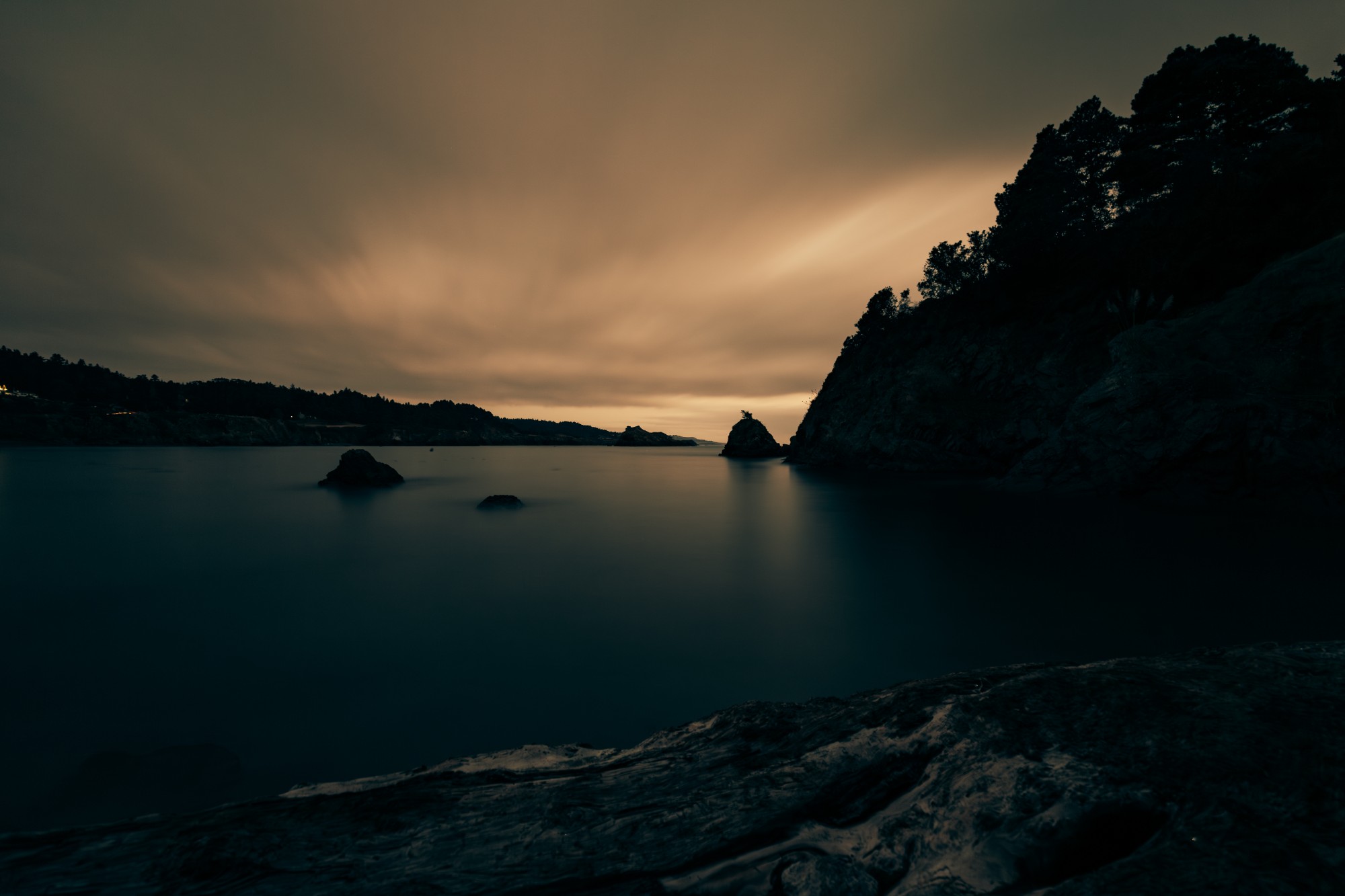
Van Damme State Park
Mendocino Coast
Coastal meadows, forested campsites and the possibility of clear skies make Van Damme a memorable place to spend a night outdoors.
Why go
Camp beneath the stars and look for familiar constellations on clear nights.
Know before you go
Coastal fog can obscure the sky, and campsite availability varies. Check overnight arrangements before visiting.
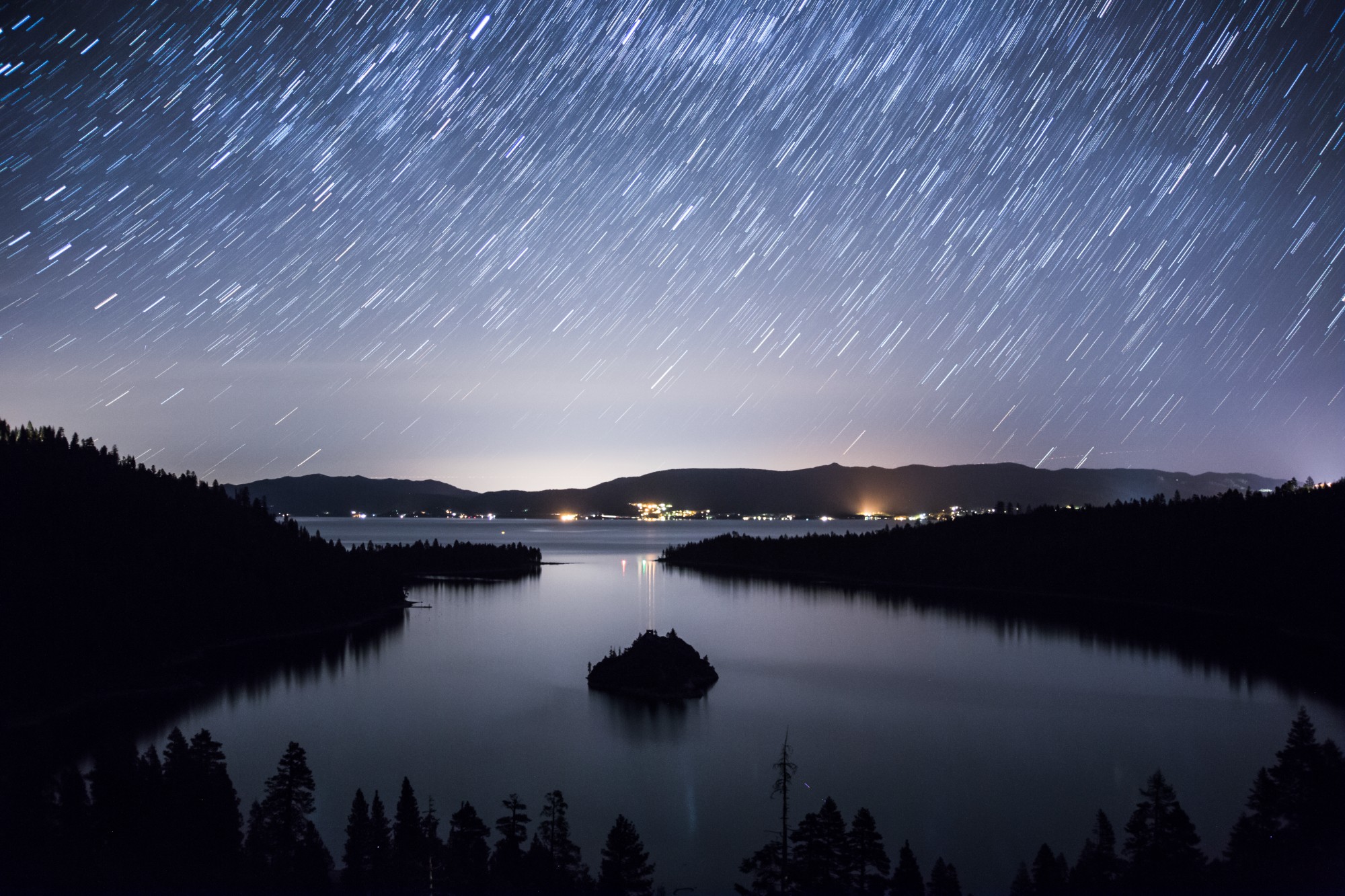
Emerald Bay State Park
Lake Tahoe
Emerald Bay brings together the dramatic mountain scenery of Lake Tahoe and the beauty of the night sky.
Why go
High-elevation Lake Tahoe scenery, seasonal camping and memorable views after dark where access is permitted.
Know before you go
Eagle Point Campground operates seasonally. Check campground dates and nighttime access restrictions before visiting.
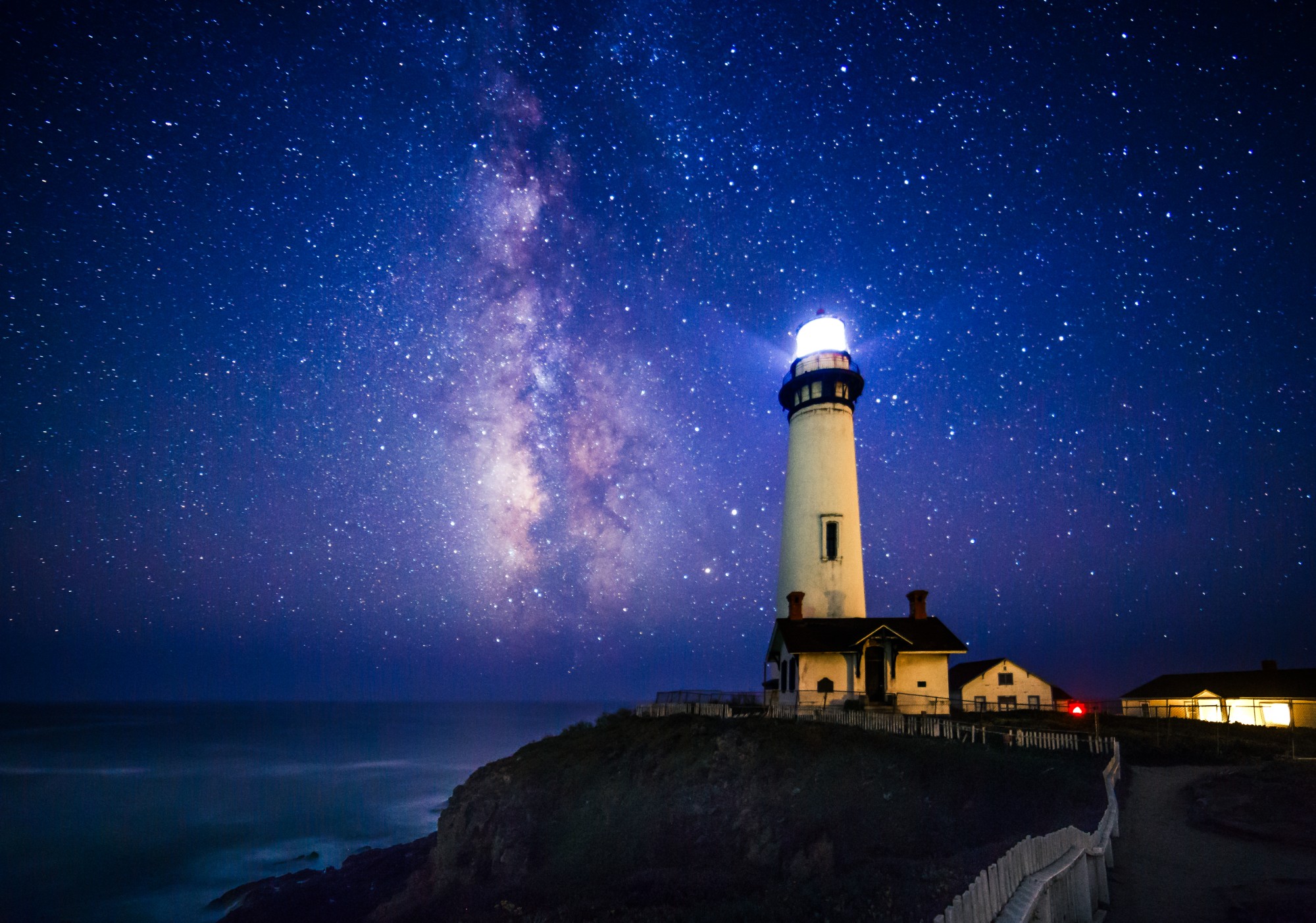
Pigeon Point Light Station State Historic Park
San Mateo County coast
A historic lighthouse stands against the Pacific Ocean, creating a dramatic setting for nighttime photography.
Why go
The opportunity to experience the lighthouse beneath a star-filled sky through permitted overnight access.
Know before you go
The state park closes to the general public at sunset. The overnight experiences described in the article apply to guests at the adjacent hostel.
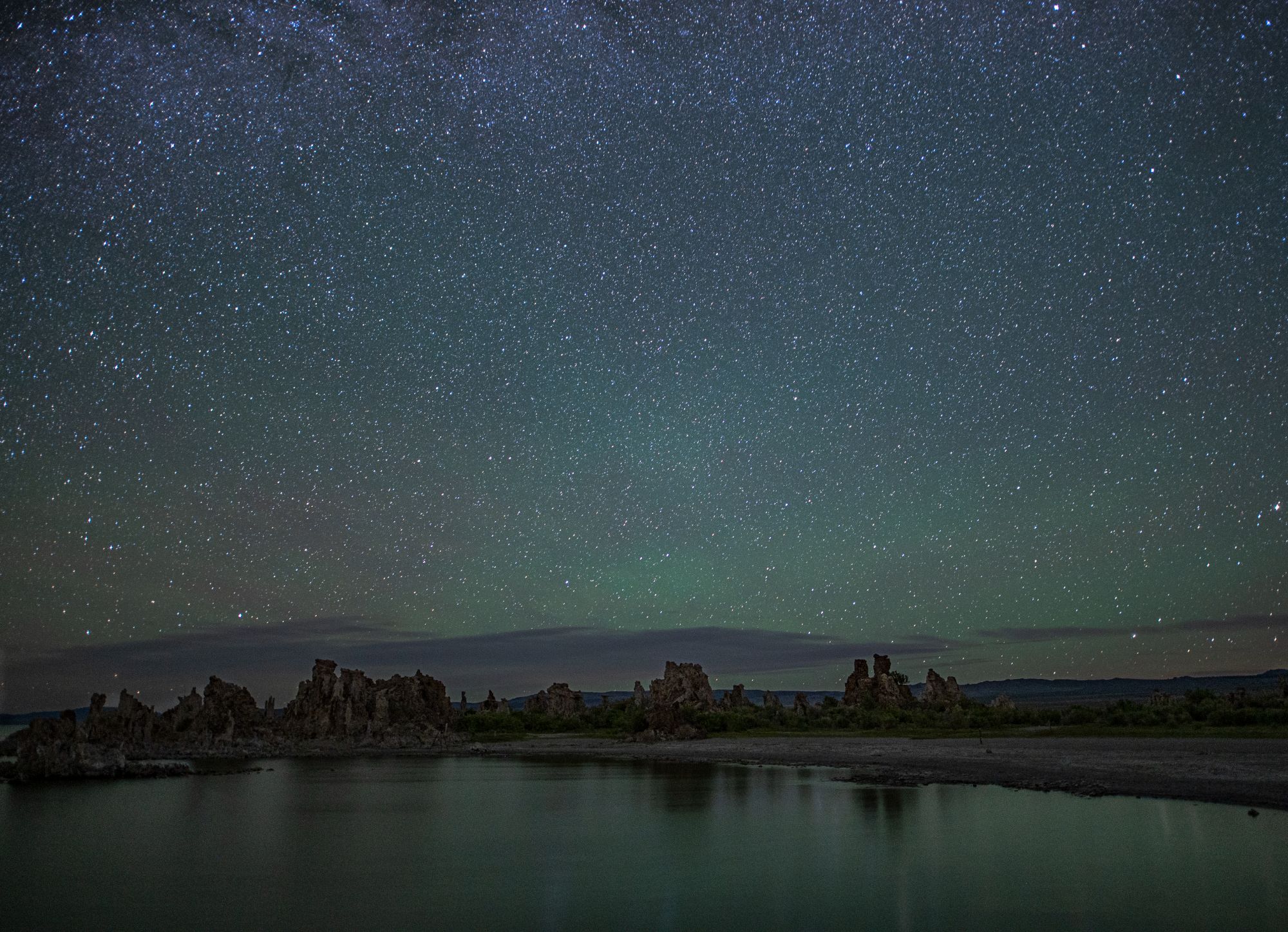
Mono Lake Tufa State Natural Reserve
Eastern Sierra
Ancient waters and unusual limestone-like tufa formations make the Mono Basin one of California’s most distinctive landscapes.
Why go
Darker skies in the remote Mono Basin and the remarkable landscape surrounding the lake.
Know before you go
Reserve day-use areas generally close at sunset. Confirm current restrictions and identify lawful nighttime viewing locations on surrounding public lands before visiting.
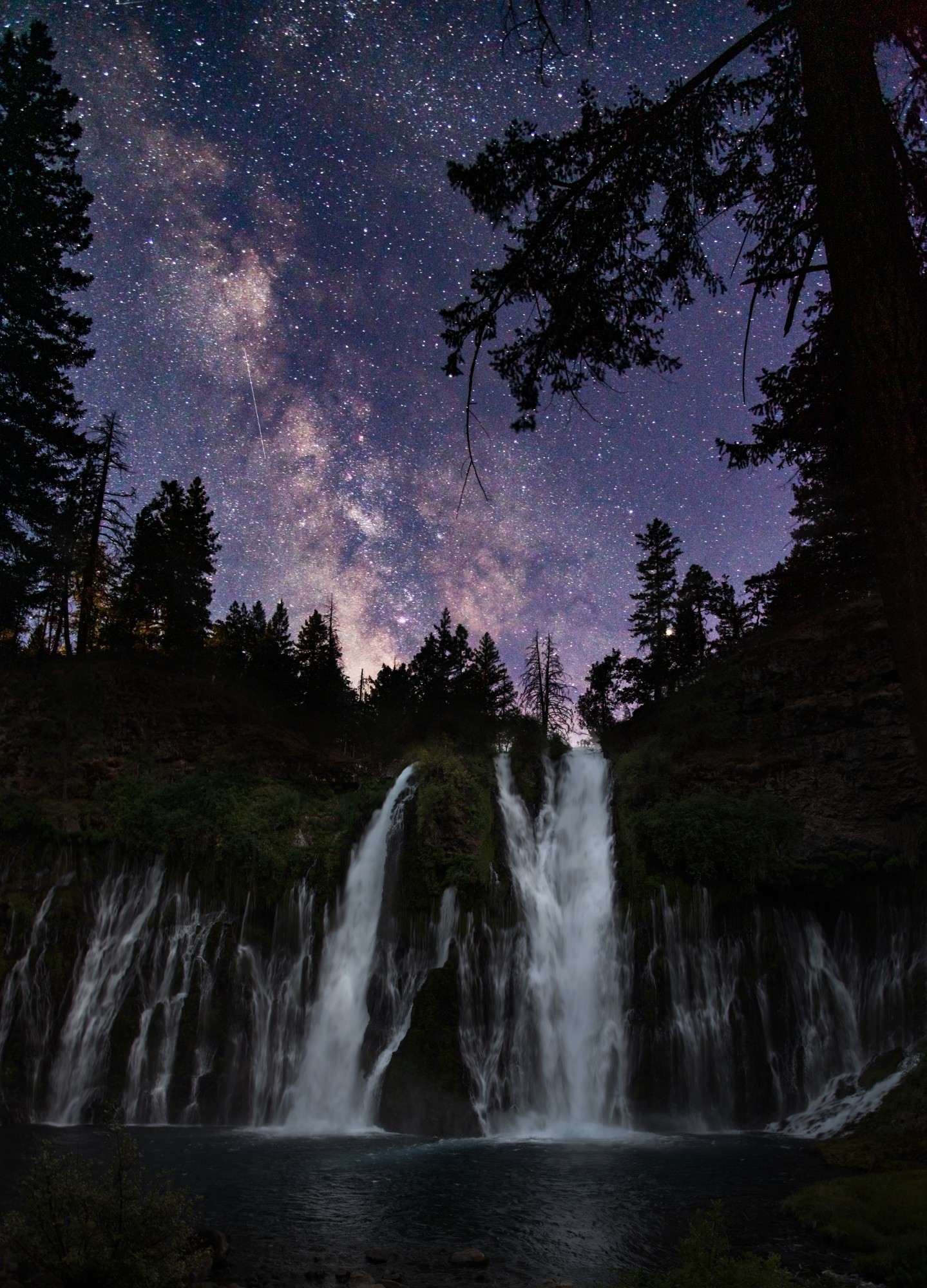
McArthur-Burney Falls Memorial State Park
Northern California
Far from major cities, the forested landscape around Burney Falls offers a beautiful setting for experiencing the night sky.
Why go
The possibility of viewing stars and the Milky Way under favorable conditions in a remote Northern California setting.
Know before you go
Check campground availability, park hours and current trail restrictions. Do not assume that trails to the falls are open at night.
Anza-Borrego Desert State Park
Southern California desert
Vast desert landscapes and exceptionally dark skies create one of California’s most memorable stargazing environments.
Why go
International Dark Sky Park recognition and expansive desert scenery.
Know before you go
Check current access rules, camping restrictions, weather and overnight temperatures before traveling.
Your home base for the great outdoors. Sign up for the Camp & Country newsletter